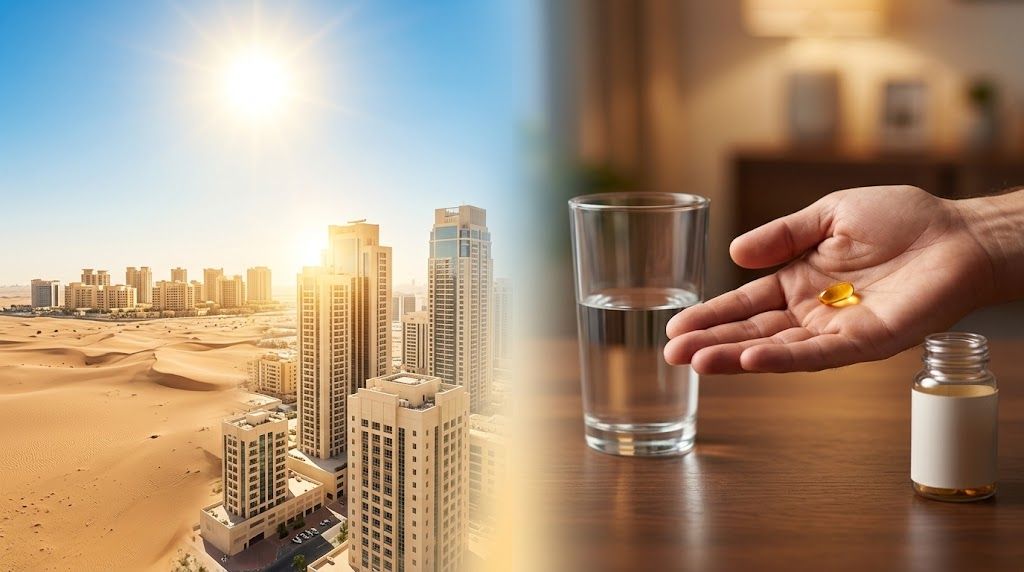
Saudi Arabia gets more sunshine in a single month than many countries see all year. Yet a large body of medical research reveals a genuine paradox: a majority of Saudis are deficient in vitamin D, the very nutrient sunlight is supposed to provide. This isn’t a minor or isolated finding — it shows up consistently across studies spanning different cities, age groups, and years, and understanding why reveals something important about how modern life has quietly disconnected us from an ancient source of health.
The Scale of the Problem
One of the most comprehensive studies on this topic tracked 22,335 people at King Khaled Hospital in Majmaah over five years, from 2017 to 2021. It found that 67.3% of the population had insufficient or deficient vitamin D levels — nearly 36% were classified as deficient, and a further 3.3% fell into the severe deficiency range. Women were disproportionately affected, accounting for close to 70% of all deficiency cases despite making up a smaller share of the study population, and the most affected age group was surprisingly young: 10 to 19 year-olds showed the lowest average vitamin D levels of any group studied. This pattern holds up across the country: separate research in Riyadh has found deficiency rates as high as 87.8% among men, while a national multistage survey found deficiency in 40.6% of Saudi men and 62.65% of Saudi women. Studies in Jeddah, Dammam, and Hail have all reported broadly similar findings, with prevalence estimates ranging from roughly 65% to over 80% depending on the population studied.
Why Abundant Sunshine Isn’t Translating to Vitamin D
The explanation lies less in the amount of available sunlight and more in how modern life in a hot climate actually unfolds. Vitamin D synthesis requires direct skin exposure to UVB rays, and several everyday factors in the Gulf work against this: traditional clothing that covers most of the skin significantly reduces the surface area available for synthesis; the intense heat, particularly during summer months, pushes daily life indoors, into air-conditioned homes, offices, and malls, for a large share of daylight hours; and widespread, medically well-advised sunscreen use — necessary to prevent skin damage in such an intense UV environment — also blocks much of the UVB radiation needed for vitamin D production. Diet compounds the gap, since natural dietary sources of vitamin D, primarily fatty fish and fortified dairy products, aren’t always consumed in the quantities needed to make up the shortfall from limited sun exposure.
An Encouraging Trend, With a Caveat
The same Majmaah study found something genuinely hopeful: deficiency prevalence dropped substantially over the study period, from 32% in 2017 to just 9% in 2020, before ticking back up slightly to 18% in 2021. This suggests that public health efforts, growing awareness, and increased supplementation may be having a real, measurable effect — though the researchers themselves noted that a study focused on a single central region shouldn’t be assumed to generalize perfectly across all of Saudi Arabia’s provinces, and that the retrospective nature of the data leaves room for other contributing factors not fully captured.
Why This Matters Beyond Bone Health
Vitamin D’s best-known role is in calcium absorption and bone health — a connection covered in depth in research on osteoporosis prevention — but its influence extends well beyond the skeleton. Research has linked vitamin D status to immune function, and deficiency has been associated with a range of other health conditions in Saudi-specific research, including certain metabolic and inflammatory concerns. This breadth of impact is part of why a deficiency this widespread, in a country with no shortage of sunlight, represents a genuine public health opportunity rather than a minor nutritional footnote.
Practical Steps to Address the Gap
- Get sensible, brief sun exposure: Around 10 to 15 minutes of midday sun on the arms and legs, a few times weekly, can meaningfully support natural vitamin D synthesis without excessive UV exposure risk — timing this outside of peak intensity hours where practical helps balance the two competing concerns.
- Include vitamin D-rich foods regularly: Fatty fish like salmon and sardines, egg yolks, and fortified dairy or plant-milk products all contribute meaningfully to dietary intake.
- Consider testing your levels: A simple blood test measuring 25-hydroxyvitamin D gives a clear, individual picture rather than relying on general population statistics, and is especially worth doing for women and adolescents, the groups shown to be at highest risk in Saudi-specific research.
- Discuss supplementation with a healthcare provider: Given how common deficiency is even among people who spend meaningful time outdoors, targeted supplementation — guided by an actual blood test rather than guesswork — is a reasonable and often necessary part of addressing this gap.
- Balance sun protection with sun exposure: This isn’t an argument against sunscreen, which remains essential for skin cancer prevention — it’s a reminder that some deliberate, brief, unprotected exposure and adequate dietary or supplemental intake both have a place in the picture.
The vitamin D paradox in the Gulf is a genuinely instructive example of how modern life can create health gaps that intuition alone wouldn’t predict. Abundant sunshine outside your window doesn’t automatically mean adequate vitamin D in your body — closing that gap takes a deliberate combination of sensible sun exposure, dietary attention, and, for many people, a conversation with a doctor about testing and supplementation.
Sources
- Prevalence and Trends of Vitamin D Deficiency in a Saudi Arabian Population: A Five-Year Retrospective Study — PMC/NCBI
- Vitamin D Deficiency and Associated Risk Factors in Women from Riyadh, Saudi Arabia — Scientific Reports
- Prevalence and Awareness Levels of Vitamin D Deficiency — Hail Journal of Health Sciences
The information in this article is for educational purposes only and does not substitute professional medical advice. Consult your physician before starting any supplementation regimen.
The Active Arabia weekly
One article built on one named study, every week, in your inbox. No noise.
We never share your email. Unsubscribe in one click.