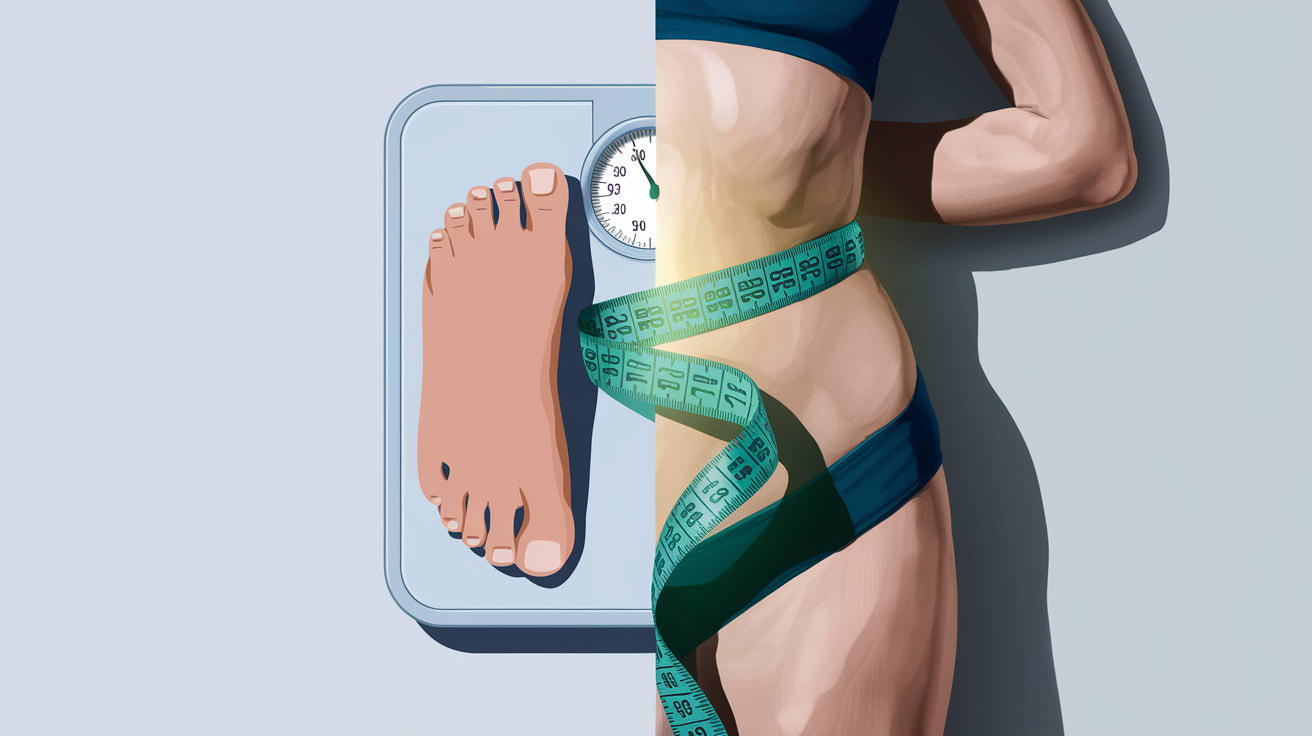
In the world of medicine and fitness, we’ve long relied on the waist-to-height ratio as a simple yet effective indicator for assessing health risks. A recent study published in Heliyon in 2024 reveals that this ratio outperforms Body Mass Index (BMI) and waist circumference alone in predicting hypertension in women. But what exactly is this ratio, and why should we care? This article explores the science behind this simple metric and what it means for your health, based on the latest research findings.
What Is the Waist-to-Height Ratio and How Is It Calculated?
The waist-to-height ratio is a straightforward measurement calculated by dividing waist circumference (in centimeters) by height (also in centimeters). Unlike BMI, which combines weight and height in a single equation, this ratio focuses on fat distribution in the abdominal area, scientifically known as visceral fat. This type of fat is particularly dangerous because it accumulates around internal organs.
The general rule recommended by researchers is to keep your waist circumference less than half your height. For example, if you’re 170 cm tall, your waist should measure less than 85 cm. This simple rule makes the metric easy to apply in daily life without complex calculations or expensive equipment. All you need is a simple measuring tape, which costs just a few dollars and can be found at any pharmacy.
The Study: A Comprehensive Comparison Between Four Metrics
In the study conducted by Cao and colleagues, published in Heliyon in 2024, researchers compared four different metrics to evaluate their ability to predict hypertension in women recovering from anesthesia. The metrics included: BMI, waist circumference, waist-to-hip ratio, and waist-to-height ratio. The sample size was large enough to provide statistically significant results.
The results were clear and decisive: waist-to-height ratio was the best predictor of hypertension, outperforming all other metrics. This aligns with previous research showing that visceral fat (which accumulates around internal organs in the abdominal area) is most strongly associated with cardiac and metabolic risks. These findings reinforce the scientific understanding that fat distribution matters more than fat quantity alone.
Why Is Visceral Fat More Dangerous Than Other Fat?
Visceral fat isn’t just a storage depot for excess energy; it’s hormonally active tissue. This fat secretes inflammatory substances called cytokines, affects insulin sensitivity, and increases the risk of heart disease and type 2 diabetes. For this reason, directly measuring visceral fat (via waist-to-height ratio) provides a more accurate picture of health risks than simply measuring total weight.
BMI, on the other hand, doesn’t distinguish between fat and muscle. An athletic person might have a high BMI due to large muscle mass while having no health risks. At the same time, someone with a “normal” weight according to BMI might have dangerous visceral fat. This is the fundamental problem with relying on BMI alone as a health indicator.
What Does Other Research Say?
These findings aren’t isolated. A systematic review and meta-analysis conducted by Ashwell and colleagues, published in Obesity Reviews in 2012, included 32 studies with approximately 300,000 participants. The conclusion was that waist-to-height ratio outperforms BMI and waist circumference in predicting cardiometabolic risk factors. This review is considered one of the strongest pieces of evidence in this field.
Another study by Agbaje, published in Pediatric Research in 2024, followed 7,237 children and found that waist-to-height ratio showed better longitudinal agreement with actual fat measurements (measured by DEXA technology) compared to BMI over time. This study is important because it shows the metric is effective even in early life stages, suggesting that monitoring should begin in childhood.
Limitations and Important Considerations
Despite this strong evidence, we must be realistic. The waist-to-height ratio isn’t a magic solution. It’s one screening tool among several. Some studies suggest that combining multiple metrics may provide a more accurate picture. There are also individual factors such as age, sex, and ethnicity that may affect the metric’s accuracy.
There are also other factors that affect health risks that this ratio doesn’t measure: physical activity, diet, family history, smoking, and stress levels. All these factors play an important role in determining overall health risks. Therefore, waist-to-height ratio should be used as part of a comprehensive assessment, not as a replacement for other medical tests and evaluations.
Practical Applications for Daily Life
- Use a simple measuring tape to measure your waist circumference at navel level
- Divide the number by your height (both in centimeters) to get the ratio
- If the ratio is 0.5 or higher, consult your doctor to assess risks
- Focus on reducing visceral fat through aerobic exercise and resistance training
- Don’t rely on the scale alone – weight doesn’t tell you about fat distribution
- Repeat the measurement monthly to track progress
The Bottom Line
The waist-to-height ratio offers a simple and effective alternative to BMI for assessing health risks. It requires no complex calculations or expensive equipment, and anyone can apply it at home. Scientific studies support its effectiveness, especially in predicting cardiac and metabolic risks. But remember: this ratio is just one tool among several, and comprehensive health requires a broader view that includes your entire lifestyle and regular medical consultation.
Sources
- Cao Q, Fan C, Fei Y, et al. “Waist-to-height ratio is a better predictor of hypertension in women during recovery from anesthesia compared to BMI, waist-to-hip ratio, and waist circumference.” Heliyon. 2024;10(6):e28297. doi:10.1016/j.heliyon.2024.e28297
- Ashwell M, Gunn P, Gibson S. “Waist-to-height ratio is a better screening tool than waist circumference and BMI for adult cardiometabolic risk factors: systematic review and meta-analysis.” Obesity Reviews. 2012;13(3):275. doi:10.1111/j.1467-789X.2011.00952.x
- Agbaje AO. “Waist-circumference-to-height-ratio had better longitudinal agreement with DEXA-measured fat mass than BMI in 7237 children.” Pediatric Research. 2024. doi:10.1038/s41390-024-03112-8
For more articles on health statistics and information, or read about grip strength as a longevity predictor.
The Active Arabia weekly
One article built on one named study, every week, in your inbox. No noise.
We never share your email. Unsubscribe in one click.