Added sugar cardiovascular mortality is one of the most pressing topics in modern nutrition research. In 2014, JAMA Internal Medicine published a landmark study by Yang and colleagues that followed 11,733 US adults for nearly 15 years and found that people who obtained 25% or more of their daily calories from added sugar faced a cardiovascular disease (CVD) death risk nearly three times higher than those consuming less than 8%. These findings underscore the urgent need to monitor and reduce added sugar in our daily diets.
Added Sugar Cardiovascular Mortality: The Key Numbers
The study drew on data from the third National Health and Nutrition Examination Survey (NHANES III), collected between 1988 and 1994, and linked it to mortality records through 2006. Researchers divided participants into groups based on the percentage of calories from added sugar: less than 8%, 8-14%, 14-17%, 17-21%, 21-25%, and 25% or more.
The results showed a clear dose-response relationship: the more added sugar people consumed, the higher their risk of dying from heart disease. Those in the 17-21% range had a 38% higher CVD mortality risk compared to the reference group. Those exceeding 25% faced an approximately 87% higher risk — nearly triple. These results held after adjusting for age, sex, race, education, physical activity, body mass index, and total caloric intake.
It is important to note that this was an observational study, meaning it demonstrates association rather than direct causation. However, it adds strong evidence to a growing body of research linking added sugar to cardiovascular harm.
How Added Sugar Damages the Heart
Added sugar harms the heart through multiple mechanisms. First, added sugar — particularly fructose — raises blood triglyceride levels. Excess fructose is metabolized in the liver through de novo lipogenesis, producing fat particles that promote arterial stiffening and plaque buildup.
Second, high sugar intake triggers chronic low-grade inflammation, a well-established driver of atherosclerosis and heart disease. Third, excessive sugar consumption contributes to insulin resistance, which raises the risk of type 2 diabetes and high blood pressure — both leading risk factors for cardiovascular events.
Fourth, sugar-sweetened beverages are associated with visceral fat accumulation around internal organs, even in people who do not appear overweight. The American Heart Association identifies sugary drinks as the single largest source of added sugar in the modern diet, and reducing them is one of the most effective steps for heart protection.
How Much Sugar Is Too Much?
The World Health Organization recommends keeping free sugar intake below 10% of total daily energy, with additional benefits below 5%. For a 2,000-calorie diet, that translates to about 50 grams (roughly 12 teaspoons) as a maximum, and 25 grams (6 teaspoons) as the ideal target.
The American Heart Association sets stricter limits: no more than 6 teaspoons (24 grams) per day for most women and 9 teaspoons (36 grams) for most men. In reality, the average American adult consumes about 17 teaspoons (68 grams) of added sugar daily — more than double the recommended maximum.
In Saudi Arabia, estimates suggest that sugar-sweetened beverage consumption is notably high, especially among young people. A single 330 ml can of soda contains about 35 grams of added sugar — exceeding the daily recommended limit for women.
Added Sugar in Saudi Arabia and the Gulf
Gulf countries face a dual health challenge: high rates of type 2 diabetes and cardiovascular disease, combined with high consumption of sugary drinks and sugar-rich processed foods. According to Saudi Ministry of Health data, diabetes and heart disease remain among the leading causes of death in the Kingdom.
Saudi Vision 2030 includes ambitious health targets to reduce obesity and diabetes prevalence, which necessarily requires cutting added sugar intake. One positive measure has been the value-added tax on sweetened beverages, which early studies suggest has contributed to reduced consumption.
However, the bigger challenge lies in hidden sugar in processed foods: sauces, packaged bread, breakfast cereals, and flavored yogurts. Many of these products are not perceived as “sweets” despite containing significant amounts of added sugar.
Practical Steps to Reduce Added Sugar
Here are six evidence-based steps to reduce your added sugar intake:
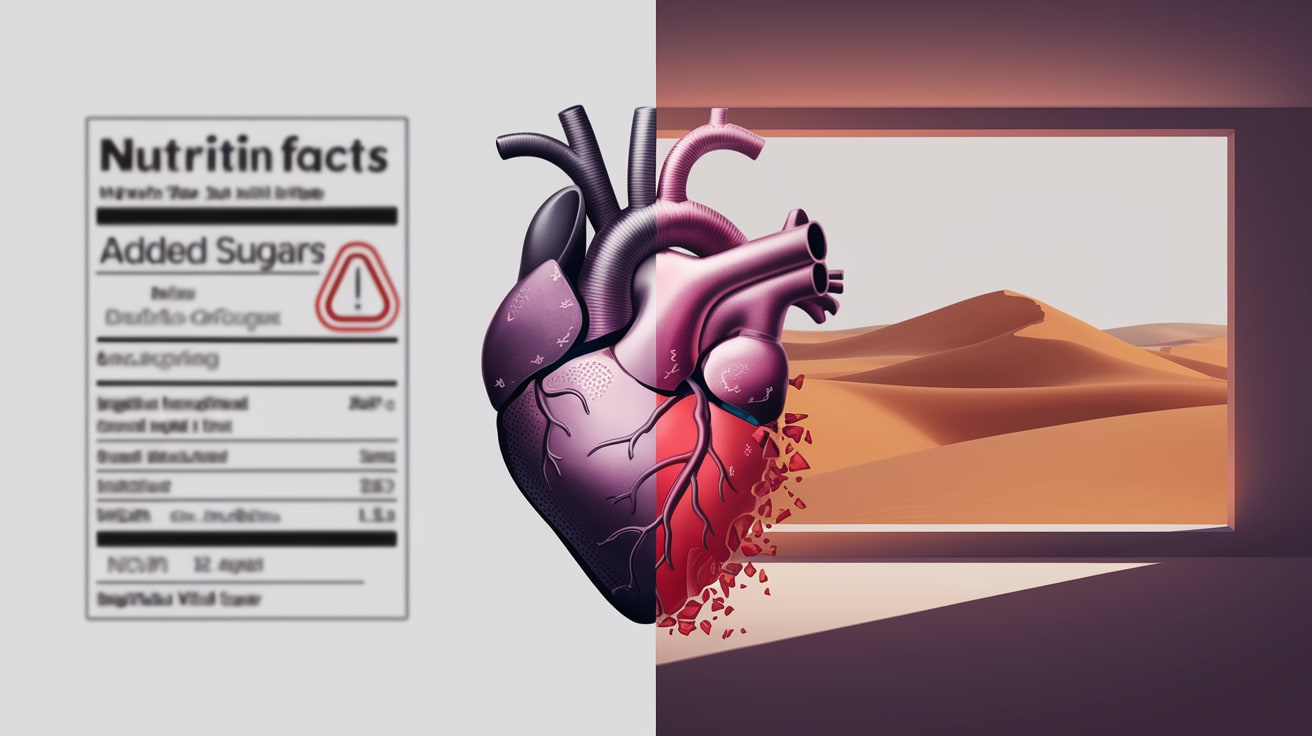
- Read the nutrition label: Look for the “Added Sugars” line on the Nutrition Facts panel. Choose products with 5% or less of the Daily Value.
- Replace sugary drinks: Water, unsweetened tea, and Arabic coffee (typically prepared without sugar) are excellent alternatives. A single can of soda contains about 9 teaspoons of sugar.
- Choose whole fruit over juice: Even 100% juice with no added sugar contains concentrated free sugars. Whole fruit provides fiber that slows sugar absorption.
- Cook at home more often: Processed foods and restaurants add large amounts of sugar, often hidden in sauces and marinades.
- Reduce sugar gradually: Taste buds adapt. When you cut sugar slowly over weeks, sweet foods begin to taste excessively sweet, and natural foods start to taste better.
- Watch for hidden sugar names: High-fructose corn syrup, cane sugar, honey, malt syrup, brown sugar — all are forms of added sugar that your body processes the same way.
Sources
- Yang Q, Zhang Z, Gregg EW, Flanders WD, Merritt R, Hu FB. “Added Sugar Intake and Cardiovascular Diseases Mortality Among US Adults.” JAMA Internal Medicine. 2014;174(4):516-524. doi:10.1001/jamainternmed.2013.13563
- Harvard T.H. Chan School of Public Health. “Added Sugar.” The Nutrition Source. Last reviewed April 2022. https://www.hsph.harvard.edu/nutritionsource/added-sugar/
- World Health Organization. “Healthy Diet.” Fact Sheet. 26 January 2026. https://www.who.int/news-room/fact-sheets/detail/healthy-diet
For more articles on nutrition, browse the Nutrition category. To understand how dietary fiber affects your health, read our article on understanding dietary fiber gut health.
The Active Arabia weekly
One article built on one named study, every week, in your inbox. No noise.
We never share your email. Unsubscribe in one click.