
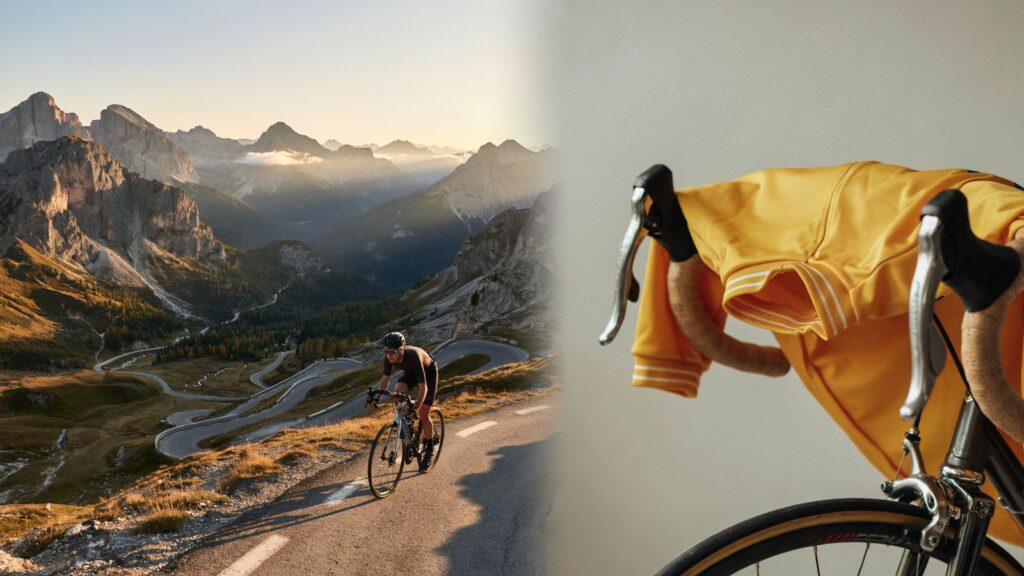
Tadej Pogačar didn’t just win the 2026 Tour de France. He rewrote the record book while doing it. The 27-year-old Slovenian crossed the finish line in Paris with a fifth Tour title, tying the record held by only four other riders in the race’s entire history — and along the way, he broke or approached records that had stood for decades, some dating back to the era of Marco Pantani and Bernard Hinault.
A Fifth Title, Joining Cycling’s Most Exclusive Club
Pogačar’s overall victory came by a final margin of 6 minutes and 26 seconds over Belgium’s Remco Evenepoel, with Mexico’s Isaac del Toro completing the podium in third. The win makes Pogačar the fifth rider ever to claim five Tour de France titles, joining Jacques Anquetil, Eddy Merckx, Bernard Hinault, and Miguel Indurain — a list that, until this year, hadn’t added a name since Indurain’s fifth win in 1995. He wore the yellow jersey from stage 6 onward, effectively deciding the race in the Pyrenees on July 9 and never relinquishing the lead for the remaining fifteen stages.
The Fastest Tour de France in History
Beyond the overall win, Pogačar’s average speed across the whole race set a new benchmark for the fastest Tour de France ever ridden, breaking a speed record that had stood for 27 years. That overall pace was punctuated by individual moments of similarly historic speed: stage 11 into Nevers saw the peloton average 50.9 km/h, the fastest mass-start stage in the race’s history. Numbers like these reflect not just Pogačar’s own form but the broader escalation of speed across the modern peloton — though it was Pogačar who repeatedly set the tone.
Rewriting the Mountain Record Books
Pogačar’s most striking individual performances came on the Tour’s two most storied climbs. On stage 6’s ascent of the Col du Tourmalet, he shattered his own previous record — set together with Jonas Vingegaard back in 2023 — riding the climb in 43 minutes and 12 seconds, more than two minutes faster than the old mark. UAE Emirates-XRG set a brutal pace on the climb before Pogačar launched a solo attack four kilometres from the summit and held it for 40 kilometres to the finish.
Even more historically resonant was his performance on Alpe d’Huez, where Pogačar climbed the legendary switchbacks in 35 minutes and 27 seconds — breaking a record set by Marco Pantani in 1997 that had stood for roughly three decades. It was his fifth stage win of this year’s race, moving his career total to 26 stage victories, now within nine of Mark Cavendish’s all-time record of 35.
A Dominant Win, With an Asterisk Worth Naming Honestly
Any complete account of this Tour has to acknowledge that Pogačar’s closest rival didn’t finish it. Jonas Vingegaard, the two-time former champion widely seen as his principal challenger, crashed and broke his collarbone on stage 15, ending his race. Germany’s Florian Lipowitz, third overall in 2025, suffered a similar fate a day later, sliding out in the stage 16 time trial and also fracturing his collarbone — with Pogačar himself flinching through the exact same corner minutes later, a stark reminder of how thin the margins in this race really are. None of this diminishes the records themselves, which were largely set independent of who Pogačar was racing against, but it’s an honest part of how this particular Tour unfolded.
Pogačar also missed one distinction: becoming the first yellow jersey holder to win the final stage into Paris since Bernard Hinault in 1982. That stage went instead to Mathieu van der Poel, and this year’s Paris finale was itself shortened as security resources were redirected to help manage wildfires near Bordeaux — a reminder that even a historic Tour unfolds against real-world circumstances beyond the racing itself.
What Made This Performance Different
- Consistency over a full three weeks: Rather than a single standout stage, Pogačar produced record-level performances on multiple, very different terrains — time trials, high mountains, and overall pacing — a breadth that’s rarer than any single record.
- Records spanning generations: Breaking marks set by Pantani (1997) and matching the achievement of Hinault and Indurain places this performance in direct conversation with the sport’s most storied eras, not just recent competition.
- A team built to enable it: UAE Emirates-XRG’s pace-setting on climbs like the Tourmalet was instrumental in creating the conditions for Pogačar’s individual records, underscoring that even historic solo rides depend on collective team strength.
Whatever comes next in Pogačar’s career, the 2026 Tour de France will stand as one of the most statistically extraordinary editions in the race’s history — a fifth title earned not just by winning, but by systematically rewriting how fast this race can be ridden.
What Comes Next
At just 27, Pogačar is now within reach of the outright record for most Tour de France titles — a mark no rider has ever exceeded, since Anquetil, Merckx, Hinault, and Indurain all stopped at five. Whether he pursues a sixth title, and whether Cavendish’s stage-win record of 35 eventually falls to him as well, will likely define much of the remaining conversation around his career. For now, though, this Tour stands on its own: a rider who didn’t just win, but redefined what winning at this level looks like across nearly every measurable category the sport tracks.
Sources
- 5 records Tadej Pogačar set during the 2026 Tour de France — BikeRadar
- Tadej Pogačar Takes Fifth Stage Win with Alpe d’Huez Record — Cycling Weekly
- Pogačar’s Winning Time Sets New Record for Fastest-Ever Tour — Cyclingnews
- Tadej Pogacar Wins Fifth Tour de France — NBC Sports
- Tadej Pogacar Wins Tour de France for a Record-Equalling Fifth Time — Al Jazeera
The information in this article is for educational purposes only.
The Active Arabia weekly
One article built on one named study, every week, in your inbox. No noise.
We never share your email. Unsubscribe in one click.