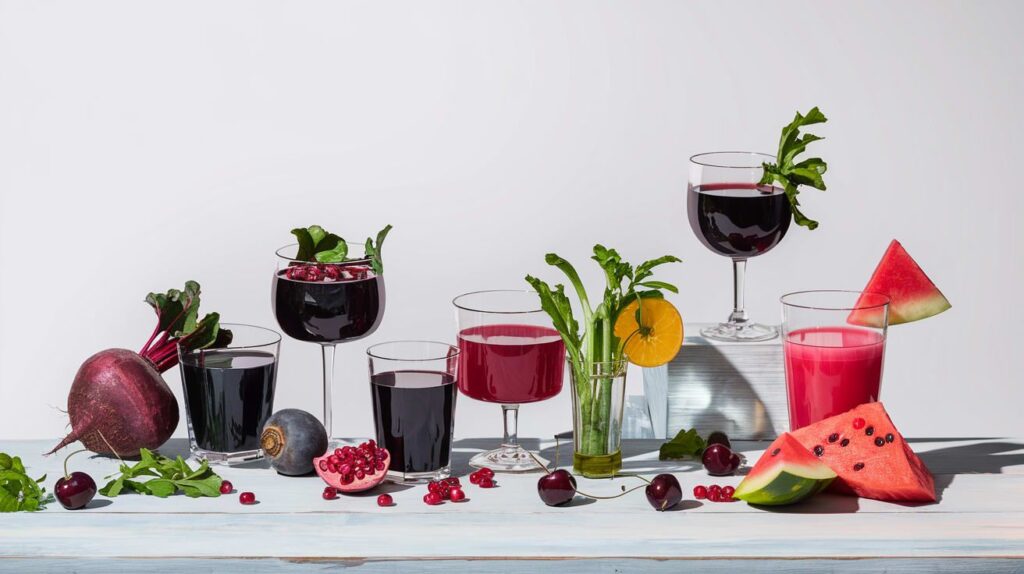
Sports nutrition has increasingly turned to something surprisingly simple: fruit and vegetable juice. A 2025 systematic review, drawing on 50 peer-reviewed studies published between 2010 and 2025 and searched across PubMed, Scopus, and Web of Science, examined five specific juices — beetroot, pomegranate, tart cherry, watermelon, and pickle juice — to see which actually hold up under scientific scrutiny for athletic performance and recovery. The findings offer a clear, evidence-based answer to a question every serious athlete eventually asks: do these juices actually work, or is it mostly marketing?
Beetroot Juice: The Clear Performance Leader
Of the five juices reviewed, beetroot juice stands out as the most reliable for enhancing performance, and the mechanism is well understood. Beetroot is naturally high in dietary nitrate, which the body converts into nitric oxide — a compound that widens blood vessels and improves the efficiency of oxygen delivery to working muscles. The review found this consistently improves oxygen efficiency and submaximal endurance, meaning athletes can sustain a given pace or power output using less oxygen than they otherwise would. There is an important caveat, though: these benefits are less evident in elite or highly trained athletes, likely because their bodies already produce nitric oxide efficiently through years of training adaptation, leaving less room for a dietary intervention to add further improvement. For recreational and sub-elite athletes, however, beetroot juice remains one of the most evidence-backed natural ergogenic aids available.
Pomegranate and Tart Cherry: The Recovery Specialists
While beetroot leads on performance, pomegranate and tart cherry juice earned the strongest evidence for recovery. Both were consistently effective at reducing muscle soreness and inflammatory markers, particularly when consumed over multiple days surrounding exercise rather than as a single pre-workout dose. Pomegranate juice’s typical effective protocol in the reviewed studies was 250 to 500 millilitres daily for 7 to 15 days, showing particular benefit after intense or damaging exercise — the kind that produces significant next-day soreness. Tart cherry juice works through a related but distinct pathway, rich in anthocyanins that appear to blunt the inflammatory response to hard training. For athletes managing a demanding training block or a multi-day competition schedule, this class of juice offers a genuinely evidence-supported recovery tool rather than a folk remedy.
Watermelon Juice: Promising but Inconsistent
Watermelon juice’s primary active compound is L-citrulline, an amino acid that, like beetroot’s nitrate, supports the body’s nitric oxide pathway. The review found watermelon juice offers genuine antioxidant and recovery support, but performance outcomes varied considerably between studies. Part of the explanation lies in processing: research suggests that processing can reduce the bioavailability of citrulline, meaning fresh or minimally processed watermelon juice likely delivers more benefit than heavily processed commercial versions. This is a useful practical takeaway — if watermelon juice is part of a recovery strategy, freshness and minimal processing genuinely matter, not just the fruit itself.
Pickle Juice: More Folklore Than Science
Pickle juice has a long-standing reputation among athletes as a rapid cramp remedy, but the review found the evidence for this claim thin. There was no strong evidence of a genuine ergogenic or recovery benefit beyond the anecdotal reports of cramp relief that have circulated in sports culture for decades. This doesn’t necessarily mean pickle juice does nothing — some athletes report a rapid, if short-lived, easing of cramps, possibly through a neurological reflex triggered by the strong taste rather than any nutritional mechanism — but it means the confidence level here is meaningfully lower than for the other four juices reviewed.
Choosing the Right Product
Not all bottled juice delivers the same benefit as what was actually tested in these studies. Many commercial juice blends dilute the active fruit or vegetable with other ingredients, added sugar, or water, which can meaningfully reduce the concentration of the specific compound doing the work — nitrate in beetroot, anthocyanins in cherry, punicalagins in pomegranate. Reading labels for concentration and ingredient purity, or preparing juice fresh where practical, gives a much closer match to the doses used in the research than grabbing a generically labelled juice drink off a supermarket shelf.
Putting the Evidence Into Practice
- For endurance performance: Beetroot juice, consumed in the days leading up to an event or before a training session focused on sustained effort, has the strongest evidence base — particularly for recreational and sub-elite athletes.
- For recovery after hard training: Pomegranate or tart cherry juice, taken consistently over several days surrounding a demanding training block, is well supported for reducing soreness and inflammation.
- For general antioxidant support: Fresh, minimally processed watermelon juice is a reasonable addition, with the understanding that performance benefits are less consistent than beetroot’s.
- For cramping: Pickle juice may offer short-term anecdotal relief for some, but shouldn’t be relied upon as an evidence-based recovery strategy.
- Timing matters: Across the juices with the strongest evidence, benefits generally emerged from sustained daily intake over days, not a single dose immediately before activity.
Why This Matters Beyond the Lab
What makes this review particularly useful is its honesty about which juices deserve confidence and which don’t. Natural juice supplementation sits in an appealing middle ground between whole-food nutrition and dedicated sports supplements — accessible, generally safe, and free of the regulatory grey areas that surround many performance products. But not all five juices examined here are equally supported by evidence, and the review’s central message is worth taking seriously: beetroot juice earns its reputation for performance, pomegranate and cherry juice earn theirs for recovery, and pickle juice’s cramp-relief reputation remains, for now, more folklore than proven science.
Sources
The information in this article is for educational purposes only and does not substitute professional medical or sports nutrition advice.
The Active Arabia weekly
One article built on one named study, every week, in your inbox. No noise.
We never share your email. Unsubscribe in one click.