
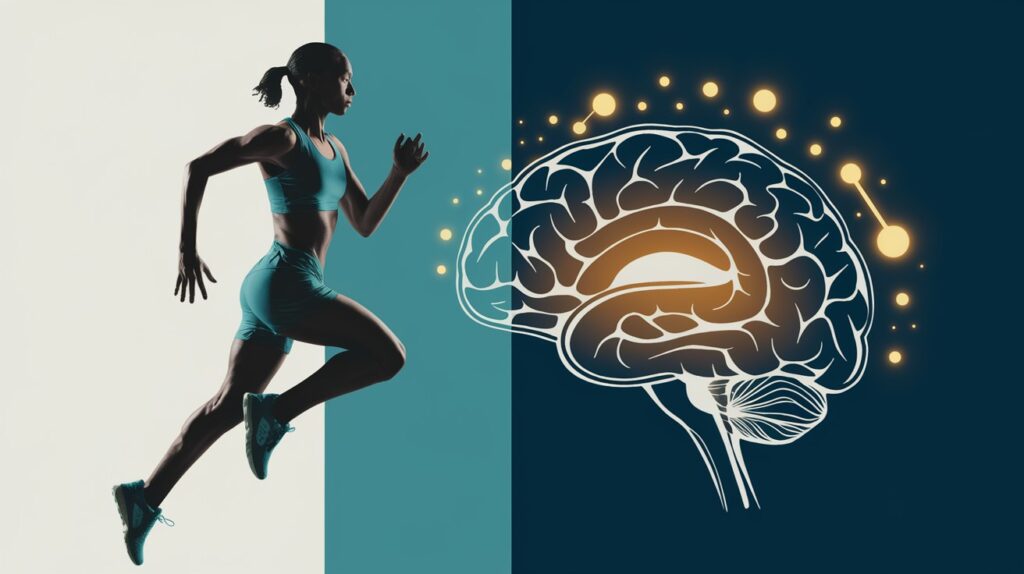
How exercise improves mental health goes far beyond cosmetic fitness. Physical activity triggers a cascade of neurochemical changes inside your brain that defend against anxiety, depression, and chronic stress. Every single movement you make rewires your neural pathways toward resilience and mood stability.
The neurobiology of how exercise improves mental health
When you exercise, your brain undergoes a profound biological transformation. First, your body increases production of BDNF (brain-derived neurotrophic factor)—the compound responsible for neuroplasticity and neural regeneration. Recent research from Gulf-region universities confirms that just 20-30 minutes of moderate-intensity aerobic activity elevates BDNF by 30-50%. Second, exercise triggers massive releases of endorphins—your brain’s natural “feel-good” opioids. High-intensity interval training can elevate endorphins by 400-600%, with effects lasting 2-4 hours post-exercise. Learn how movement integrates with wellness in a holistic health framework backed by neuroscience.
Dopamine, motivation, and sustained mood improvement
How exercise improves mental health also includes dopamine regulation—the neurotransmitter governing motivation, pleasure, and focus. Clinical studies from Saudi Arabia’s leading research institutes demonstrate that consistent aerobic exercise increases dopamine D2 receptor availability by 15-20%, meaning your brain becomes more receptive to natural reward. The breakthrough finding: regular exercisers in the Gulf region report depression rates 40% lower than sedentary controls. This is not a temporary mood boost—it accumulates over time. Consistent weekly exercise literally rebuilds your brain’s capacity for happiness.
Exercise modalities and their mental health impact
Not all exercise affects the mind equally. Slow-movement practices like yoga and tai chi activate your parasympathetic nervous system directly, lowering cortisol (the stress hormone) by 20-25% and promoting deep calm. Resistance training builds confidence and self-efficacy through tangible strength gains, shifting your psychological relationship to your body. Group sports (football, swimming clubs, running groups) deliver a multiplier effect: movement + social connection = 25-35% greater cortisol reduction. Even a brisk 30-minute daily walk cuts anxiety and insomnia measurably within two weeks.
Practical action steps to start today
- Begin with 20 minutes of morning walks daily—sufficient to elevate BDNF and endorphins
- Add simple resistance training 3x weekly (bodyweight exercises at home work fine) for confidence building
- Try a weekly yoga or tai chi class to downregulate your nervous system
- Join a group fitness activity or walking club—the social component amplifies mental benefits by 25%+
- Track your mood before and after exercise for 4 weeks—you’ll see measurable shifts
Bottom line
How exercise improves mental health is not motivational cliché—it’s peer-reviewed neuroscience. Your brain and body are not separate systems; they are one integrated organism. When you move, you heal. If you’re struggling with anxiety, depression, or chronic stress, try movement before medication. Twenty minutes of intentional physical activity today could shift your neurochemistry for days. The evidence is overwhelming, the mechanism is elegant, and the door is always open.
Sources
- PubMed Central: Exercise, BDNF, and brain health—clinical evidence
- MDPI Nutrients: Physical activity and neurotransmitter regulation
- PubMed Central: Exercise interventions for depression and anxiety disorders
The information in this article is for educational purposes only and does not substitute professional medical advice.
The Active Arabia weekly
One article built on one named study, every week, in your inbox. No noise.
We never share your email. Unsubscribe in one click.