
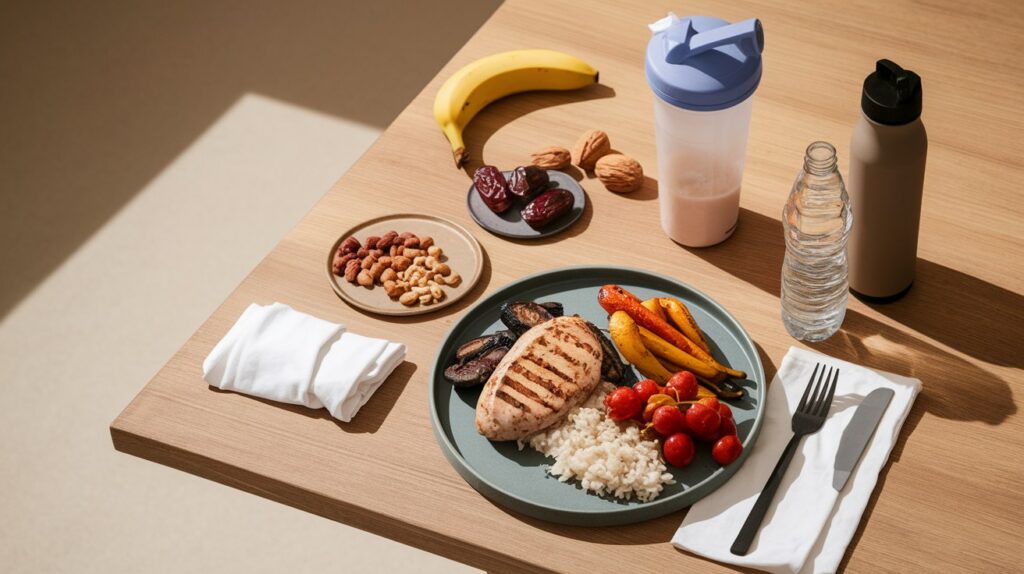
Sports nutrition is not an optional extra for athletes—it’s foundational to performance and recovery. Every serious athlete eventually learns the same lesson: the work you put in during training only translates into real gains if your body has what it needs to recover and adapt afterward. This doesn’t require complicated diets or rigid food rules. It means making smart, well-timed food choices around your training sessions.
How Nutrition Supports Recovery
Hard training deliberately stresses muscle tissue—that’s the mechanism behind getting stronger and fitter. Those stressed muscle fibers rebuild stronger during recovery, but only if the body has adequate protein, carbohydrate, and micronutrients available to do the rebuilding work. Protein supplies the building blocks for repairing and growing new muscle tissue. Carbohydrate replenishes the glycogen stores that fuel training. Vitamins and minerals support the many metabolic processes involved in tissue repair. Sports nutrition research consistently finds that athletes who fuel and recover strategically around their training sessions see more consistent progress than those who eat reactively, without a plan tied to their training schedule.
Three Practical Timing Windows
You don’t need a nutritionist or a calorie-tracking app to get sports nutrition timing right. The core principle comes down to three practical windows around training:
- Before training (1–2 hours prior): Favor light, easily digestible carbohydrates with modest fat and fiber to avoid digestive discomfort during exercise—dates, a banana, or whole wheat bread with a little peanut butter are all reasonable choices. The goal is fuel without heaviness.
- During training (if longer than about 60 minutes): For sessions longer than an hour, taking in some carbohydrate and electrolytes—water with a pinch of salt and a carbohydrate source—helps maintain hydration and delay fatigue.
- After training (within roughly an hour): This window matters most for recovery. Combining protein (chicken, fish, eggs, or a plant-based equivalent) with carbohydrates (rice, potatoes, or bread) supports both glycogen replenishment and the muscle repair process, and eating relatively soon after a hard session—rather than waiting several hours—tends to support more consistent recovery.
None of these windows require precision to the minute—the value comes from having a general rhythm around training rather than eating entirely reactively or skipping meals around sessions.
Hydration as Part of the Nutrition Picture
Fueling and hydration are closely linked, and it’s worth treating them together rather than as separate concerns. Even mild dehydration measurably impairs strength, endurance, and concentration during training, which means an otherwise well-planned nutrition strategy can be undermined by inadequate fluid intake. In hot climates, or during longer training sessions, fluid and electrolyte needs rise meaningfully above baseline daily requirements. A practical approach is checking urine color as a rough hydration gauge—pale yellow generally indicates adequate hydration—and drinking steadily throughout the day rather than trying to catch up with a large volume right before training, which tends to cause discomfort without meaningfully improving performance.
Adapting to Different Training Goals
Nutrition needs shift depending on training goals, not just training volume. An athlete building strength and muscle mass generally needs a modest calorie surplus with adequate protein spread across the day, while an endurance athlete focused on long-duration events prioritizes consistent carbohydrate availability to support glycogen stores across many training hours. Someone managing multiple training goals simultaneously—strength and endurance together, for instance—benefits from a more flexible approach that shifts emphasis depending on which type of session is coming up, rather than applying one fixed nutrition template regardless of the day’s training demands.
Real Food Over Supplements
You don’t need expensive powders or branded supplements to fuel athletic performance well. Chicken, fish, eggs, milk, beans, rice, bread, dates, bananas, sweet potatoes, olive oil, nuts, and a variety of colorful vegetables collectively provide everything most recreational and even many competitive athletes need. Whole foods also come with the advantage of a broader range of micronutrients and fiber than most single-ingredient supplements provide. Supplements have a legitimate role for some athletes in specific situations—convenience during travel, or filling a genuine dietary gap—but for most people, a well-planned diet built around real food covers sports nutrition needs more completely and affordably than relying primarily on supplements.
Building a Sustainable Approach
The athletes who sustain good nutrition habits over years, rather than following a strict plan for a few weeks and abandoning it, tend to be the ones who build flexible general principles—like the three timing windows above—rather than rigid rules that are difficult to maintain around a busy, varying schedule. Life doesn’t always cooperate with perfect timing, and that’s fine: consistently getting roughly the right nutrients around most training sessions matters far more than achieving perfect precision occasionally before reverting to poor habits.
Good sports nutrition doesn’t need to be complicated or expensive. A rhythm built around real food, timed reasonably around your training, and applied consistently over months and years is what actually drives long-term athletic progress—not any single perfect meal or supplement. The athletes who improve most steadily tend to be the ones who treat nutrition as a durable habit rather than a short-term intervention tied to a single competition or goal. Over a season or a year, that consistency compounds into meaningfully better recovery, more reliable energy in training, and steadier long-term progress than any short-term nutrition push around a single event. Treat these principles as a flexible framework to return to, not a rigid checklist, and they’ll serve you well across whatever training phase you’re in.
Sources
The information in this article is for educational purposes only and does not substitute professional medical advice or personalized nutrition consultation.
The Active Arabia weekly
One article built on one named study, every week, in your inbox. No noise.
We never share your email. Unsubscribe in one click.