
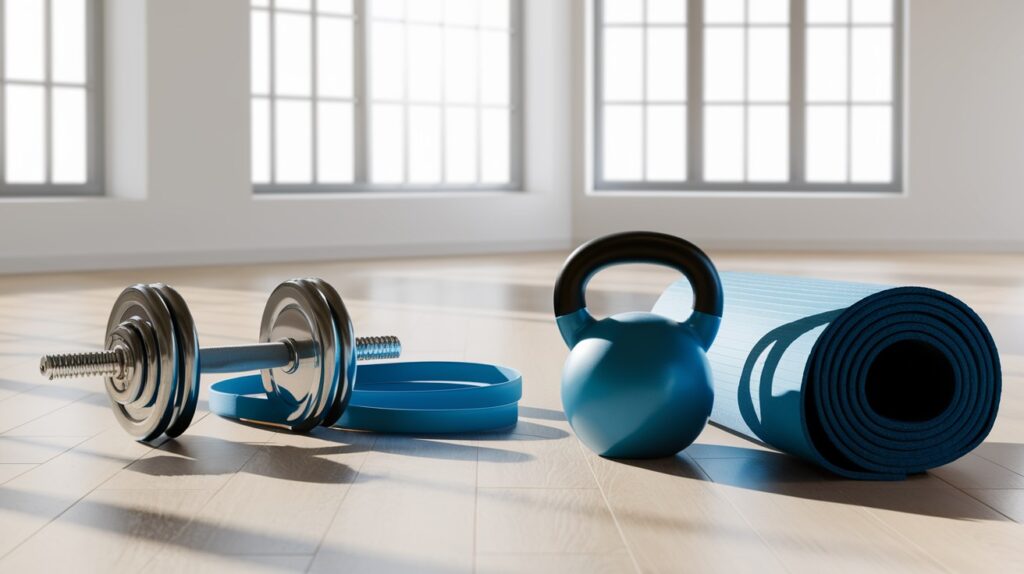
Building meaningful strength doesn’t require complex equipment or lengthy gym sessions. In 2026, the American College of Sports Medicine released a major update to its resistance training guidelines, based on an extensive review of the accumulated research—the first major revision of its kind in 17 years. The core takeaway is genuinely encouraging: you don’t need hours at the gym or expensive equipment to build real strength. Research shows that just a few minutes of daily resistance work, using nothing more than your own bodyweight, meaningfully improves strength, muscle size, and overall physical capability over time.
Getting Started the Right Way
Recent research confirms a simple but important point: virtually any form of resistance training improves strength, muscle size, power, and overall physical function—regardless of what equipment, if any, is used. Heavy weights are not required. Bodyweight exercises, resistance bands, and light dumbbells have all been shown to deliver real, measurable results when performed consistently. The accessibility of this approach is genuinely its greatest strength: there is no barrier of cost or gym access standing between you and meaningful progress, which matters enormously for whether people actually stick with a routine long enough to see results.
What Actually Drives Muscle Growth
One of the more useful findings from recent research is around training volume: total weekly volume—roughly ten sets per muscle group per week—appears to be the primary driver of muscle growth, more so than the specific split or schedule used to accumulate it. This means you can spread your training across multiple shorter sessions throughout the week and still achieve strong results, rather than needing to commit to long, infrequent workouts. What matters most is consistency, not finding a theoretically perfect program. Choosing exercises you can realistically sustain—whether at home or in a gym—and committing to them regularly will outperform a “perfect” program you abandon after two weeks.
Benefits That Go Beyond Muscle
The value of regular resistance training extends well past visible muscle. Research consistently links resistance training to improved cardiovascular health, better metabolic function, enhanced mood and cognitive performance, and increased bone density—the last of which matters enormously for long-term fracture prevention, particularly as people age. Regular practitioners tend to show a lower risk of several chronic diseases, better flexibility, and greater functional independence in daily life. For older adults specifically, maintaining resistance training is one of the more reliable ways to preserve mobility, strength, and overall quality of life compared to a sedentary lifestyle—the effect size here is genuinely one of the largest in preventive health research.
A Practical Way to Start Today
- Start small: A few minutes daily using bodyweight exercises like chair squats and wall push-ups is a genuine, evidence-backed starting point—not a compromise.
- Target roughly 10 sets per muscle group weekly: This can be split across two to three sessions—for example, three to four sets per session, three times a week.
- Progress gradually: Begin with bodyweight movements, then add resistance bands or light weights as strength and confidence build.
- Prioritize consistency over intensity: Training three times weekly, consistently, will outperform sporadic, occasionally intense sessions over the medium and long term.
- Allow adequate recovery: Roughly 48 hours between sessions targeting the same muscle groups supports proper adaptation and reduces injury risk.
Building the Habit for the Long Term
The single biggest determinant of whether a resistance training routine actually improves your health isn’t the specific exercises chosen—it’s whether you keep doing it. Starting with a genuinely small, low-friction commitment, like five minutes a day of simple bodyweight movements, removes the usual barriers of time, cost, and intimidation that keep many people from starting at all. As that habit becomes automatic, progressing to slightly more challenging variations or added resistance becomes a natural next step rather than an intimidating leap. This gradual, sustainable approach is precisely what the underlying research supports: consistent, moderate effort accumulated over months and years, not dramatic short-term intensity.
You don’t need a gym membership or specialized equipment to start building real strength. Beginning today, with whatever you have available at home, is a genuinely evidence-based way to invest in your long-term physical health—and the accumulated research is unusually clear that the biggest gains in health come from going from doing nothing to doing something small and consistent, not from chasing an optimal program from day one. Start where you are, with what you have, and let consistency do the rest of the work over the coming weeks and months. Track how you feel and how your strength progresses rather than fixating on any single metric—the cumulative trend over months is what actually reflects genuine progress, far more than any individual session.
Form Matters More Than Load
A common mistake when starting resistance training is prioritizing how much weight or resistance is used over how well an exercise is actually performed. Controlled, full-range-of-motion movement recruits muscle more effectively than a rushed repetition with poor form, and it substantially lowers injury risk—an important consideration for anyone new to training. For bodyweight exercises like squats or push-ups, focusing on slow, controlled movement through a full range of motion, even against no added resistance, is often more effective for early progress than adding weight prematurely. As form becomes consistent and comfortable, gradually increasing resistance—through added weight, resistance bands, or more challenging exercise variations—becomes the natural next step, rather than something to rush into from the first session.
Sources
- You don’t need intense workouts to build muscle — ScienceDaily
- Even small amounts of resistance training build muscle — Medical Xpress
The information in this article is for educational purposes only and does not substitute professional medical advice.
The Active Arabia weekly
One article built on one named study, every week, in your inbox. No noise.
We never share your email. Unsubscribe in one click.