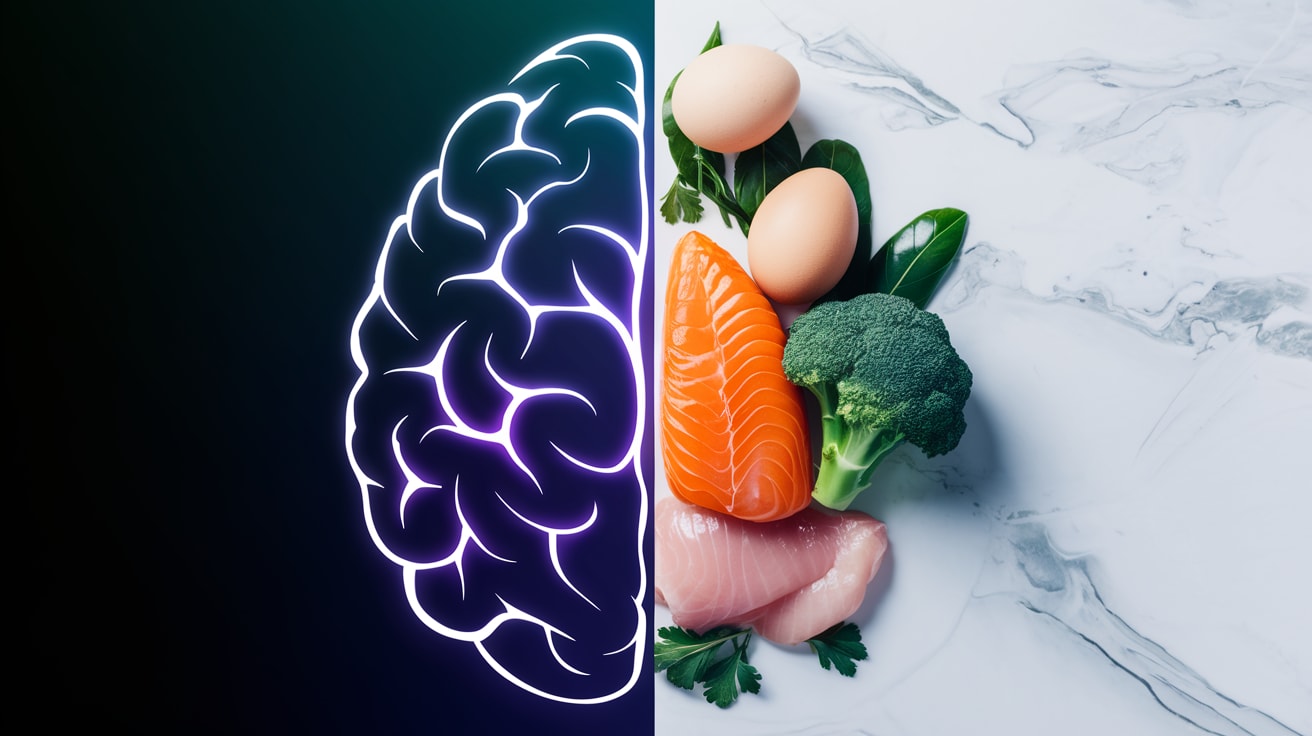
A groundbreaking study published in May 2026 has revealed a striking choline anxiety brain connection, showing that people with anxiety disorders have significantly lower levels of choline in their brains, particularly in the prefrontal cortex—the region responsible for emotional regulation. This discovery opens new avenues for understanding how nutrition impacts mental health and may point to dietary interventions that could support anxiety management alongside traditional treatments.
What Is Choline and Why Does Your Brain Need It?
Choline is an essential nutrient that your body needs to function properly, and it’s particularly crucial for brain health. Choline serves as a precursor for acetylcholine, a neurotransmitter that plays a vital role in memory, learning, muscle movement, and mood regulation. It’s also necessary for producing phosphatidylcholine, a key component of cell membranes throughout the body, including neurons in the brain.
According to the National Institutes of Health, men need 550 mg of choline daily, while women need 425 mg daily. Although your liver produces some choline, the amount is insufficient to meet cellular needs, meaning you must obtain choline from food or supplements. Rich dietary sources include eggs, liver, meat, fish, cruciferous vegetables like broccoli and cauliflower, and legumes. One hard-boiled egg contains approximately 147 mg of choline—about 27% of the recommended daily value.
The New Study: Brain Scan Analysis Reveals Choline Deficit in Anxiety Patients
The May 2026 study was a major analysis of brain scans comparing choline levels between people with anxiety disorders and healthy controls. The findings were clear: individuals with anxiety showed noticeably lower choline levels in their brains. Most significantly, this deficit was most pronounced in the prefrontal cortex, the brain region responsible for emotional regulation, decision-making, and behavioral control.
The prefrontal cortex acts as the brain’s emotional command center. When it doesn’t receive adequate choline, its ability to regulate emotional responses may be compromised. Choline is also essential for producing phosphatidylcholine, a critical component of neuronal cell membranes. Without sufficient choline, these membranes’ integrity and their ability to transmit signals effectively may be affected, potentially contributing to the development or worsening of anxiety symptoms.
How Does choline anxiety brain Connection Work? Biological Mechanisms
Several mechanisms may explain how choline deficiency contributes to anxiety and affects brain function:
First: Choline is necessary for acetylcholine production, a neurotransmitter that influences mood and stress response. When acetylcholine levels drop, the brain may become more sensitive to stress and less capable of regulating emotional responses effectively. This can lead to increased feelings of anxiety and tension in everyday situations.
Second: Choline plays a role in producing trimethylglycine (TMG), which helps regulate homocysteine levels in the body. Elevated homocysteine has been linked to increased risk of depression and anxiety according to numerous previous studies. Therefore, choline deficiency may indirectly lead to increased homocysteine levels, negatively affecting mental health.
Third: Choline is essential for neuronal cell membrane health. When nerve cells don’t receive enough choline, their ability to communicate effectively may be impaired, affecting mood regulation and emotional processing. This can create a neural environment more susceptible to anxiety and mood disorders.
Choline-Rich Foods: How to Increase Your Daily Intake
If you’re concerned that your diet may not contain enough choline, here are some excellent sources of this essential nutrient that you can easily add to your daily meals:
- Eggs: One hard-boiled egg contains 147 mg of choline (27% of daily value). You can eat eggs for breakfast or add them to salads and various dishes.
- Liver: 3 oz of pan-fried beef liver contains 356 mg (65% of daily value). Liver is one of the richest sources of choline available.
- Meat: 3 oz of roasted chicken breast contains 72 mg (13%). Red meat also contains good amounts of choline.
- Fish: 3 oz of cooked Atlantic cod contains 71 mg (13%). Fatty fish like salmon and tuna also provide omega-3 fatty acids beneficial for brain health.
- Roasted soybeans: Half a cup contains 107 mg (19%). Soybeans are an excellent source of both protein and choline.
- Cooked broccoli: Half a cup contains 31 mg (6%). Broccoli also contains antioxidants that support brain health.
- Cauliflower: Half a cup contains 24 mg (4%). Cauliflower is a great option as a side dish or in salads.
- Peanuts: Quarter cup contains 24 mg (4%). Nuts and seeds are good sources of choline as healthy snacks.
It’s important to note that cooking methods can affect choline content in food. Healthy cooking methods like boiling or grilling help preserve the maximum amount of nutrients compared to deep frying or cooking at very high temperatures.
Gulf Context: Are People in Saudi Arabia Getting Enough Choline?
In the Gulf region, where anxiety and depression rates are elevated according to numerous epidemiological studies, choline deficiency may play an important role that deserves attention. The traditional diet in the region is rich in fish, eggs, and meat—all good sources of choline. However, modern dietary changes may affect the amount of choline individuals consume.
Increased consumption of processed foods and reduced intake of whole, nutrient-dense foods may contribute to choline deficiency in some individuals. Additionally, postmenopausal women need more choline due to decreased estrogen levels, which help produce choline in the body. This is particularly important in our region, where awareness of women’s health and healthy aging is increasing.
Important Caveats: What the Study Doesn’t Tell Us
While this study is intriguing and opens new avenues for research, several important caveats must be considered before drawing any final conclusions:
First: This is an observational study, meaning it shows an association between low choline levels and anxiety but doesn’t prove that choline deficiency directly causes anxiety. People with anxiety may eat less overall, leading to lower choline levels. The relationship may be reverse or there may be other common factors involved.
Second: More randomized clinical studies are needed to determine whether increasing choline intake can help treat or prevent anxiety disorders. Current studies provide only preliminary evidence and cannot be relied upon for specific treatment recommendations.
Third: Anxiety is a complex disorder with multiple causes, including genetic, environmental, psychological, and social factors. Choline deficiency is unlikely to be the sole cause of anxiety, but it may be one contributing factor among many others that affect mental health.
Practical Takeaways: Supporting Your Mental Health Through Nutrition
Based on what we know so far from this study and previous research, here are practical steps to support your mental health through proper nutrition:
- Eat one egg daily: This is an easy and delicious way to increase your choline intake by 27% of the daily value. Eggs are also an excellent source of protein and other vitamins.
- Add cruciferous vegetables to your meals: Broccoli, cauliflower, and cabbage are good choline sources and also contain other nutrients that support brain health and reduce inflammation.
- Choose fatty fish: In addition to choline, fatty fish like salmon, tuna, and sardines provide omega-3 fatty acids that support brain health and reduce inflammation.
- Avoid extreme diets: Highly restrictive diets may lead to choline and other nutrient deficiencies important for brain health. Follow a balanced and varied diet.
- Consult a registered dietitian: If you’re concerned your diet doesn’t contain enough choline, consulting a registered dietitian who can provide personalized advice for your situation may be beneficial.
- Don’t rely on supplements alone: It’s best to get choline from whole foods, which contain other nutrients that work synergistically to support overall brain and body health.
Related on Active Arabia: evidence-based anxiety management techniques.
Sources
- ScienceDaily. (2026, May 16). Scientists Find Hidden Brain Nutrient Deficit That May Fuel Anxiety.
- National Institutes of Health. (2022). Choline – Fact Sheet for Health Professionals. Office of Dietary Supplements.
- Zeisel, S. H. (2012). A brief history of choline. Annals of Nutrition & Metabolism, 61(3), 254-258.
- Wallace, T. C., & Fulgoni, V. L. (2016). Assessment of Total Choline Intakes in the United States. Journal of the American College of Nutrition, 35(2), 108-112.
Disclaimer
This article is for educational purposes only and does not constitute medical advice. If you are experiencing symptoms of anxiety or any other mental health disorder, please consult a qualified healthcare provider or mental health professional. Do not rely on the information in this article as a substitute for professional medical advice.
The Active Arabia weekly
One article built on one named study, every week, in your inbox. No noise.
We never share your email. Unsubscribe in one click.