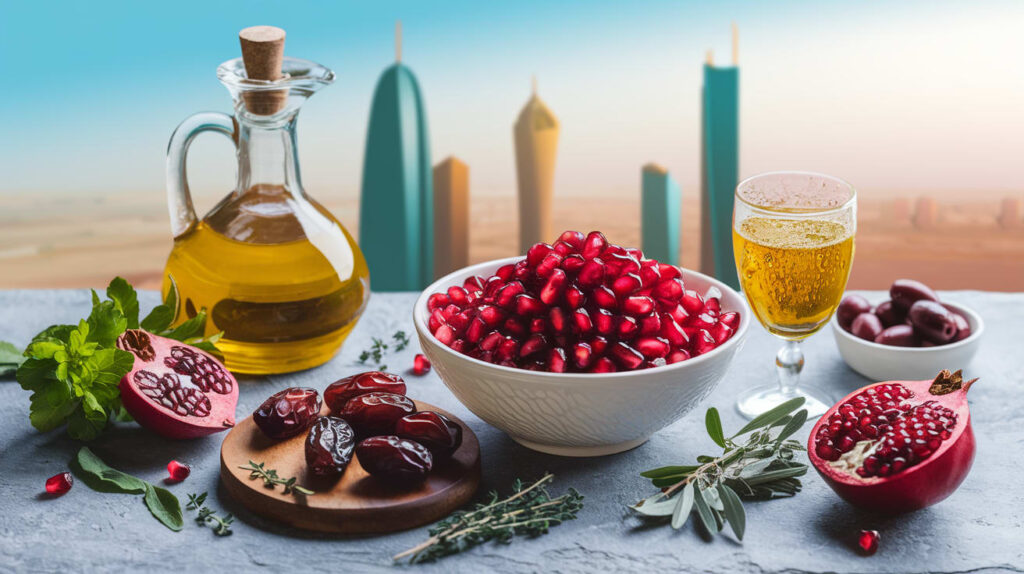
Antioxidant rich traditional arab foods — pomegranate, dates, extra-virgin olive oil, and fresh herbs — form a dietary pattern that a 2026 study in the journal Antioxidants found to carry significantly higher total antioxidant capacity and phenolic diversity than non-Mediterranean European recipes. For readers in Saudi Arabia and the Gulf, where cardiovascular disease remains the leading cause of death, these everyday ingredients are not merely cultural heritage: they are a documented source of cellular protection that modern science is only beginning to quantify. These foods form part of a broader dietary approach to diabetes management and healthy eating.
What the 2026 Mediterranean recipes study actually found
Cuenca-Ortola and colleagues analysed 56 traditional recipes from eight countries, grouping them into Mediterranean European (France, Italy, Spain), Mediterranean African-Arab (Tunisia, Algeria, Morocco), and non-Mediterranean European (Luxembourg, Germany). The team measured both extractable and non-extractable polyphenol fractions — the latter being the portion that reaches the colon, where most antioxidant activity actually occurs. Mediterranean recipes, including the Arab dishes from North Africa, showed significantly higher total antioxidant capacity and a more diverse polyphenolic profile than the northern European group. Olive oil was the single ingredient most strongly associated with the phenolic advantage, but the combination of olive oil with herbs, legumes, and dried fruits in complete traditional dishes produced a synergistic effect that no single ingredient replicated alone.
Pomegranate: from traditional remedy to measured endothelial benefit
Pomegranate (Punica granatum) contains punicalagins, a class of ellagitannins that are among the most potent dietary antioxidants. Multiple human trials have now demonstrated that regular pomegranate juice consumption improves flow-mediated dilation (FMD) — the standard clinical measure of endothelial function. A review of nutraceuticals and atherosclerosis cited cumulative evidence that pomegranate juice intake improved FMD of the brachial artery, and a 2026 review in Nutrients confirmed that fruit-derived polyphenol interventions, including pomegranate, modulate arterial stiffness through endothelial nitric oxide signalling. The mechanism is biologically plausible: punicalagin metabolites reduce oxidative stress in the vascular wall, preserving the nitric oxide that keeps arteries flexible.
For Saudi readers, pomegranates are widely available fresh and as unsweetened juice. The evidence supports modest daily intake — approximately 150 ml of unsweetened juice — rather than large quantities. One honest limitation: most trials ran for four to eighteen months, and the effect sizes, while statistically significant, are modest compared with pharmaceutical interventions.
Antioxidant rich traditional arab foods: the role of date palm polyphenols
Date palm (Phoenix dactylifera) fruit contains over 50 identified phenolic compounds, including flavonoids (quercetin, kaempferol), phenolic acids (protocatechuic, gallic, caffeic), and tannins. A 2026 narrative review in Antioxidants by Barakat and Ghonimy summarised evidence that regular date consumption is associated with favourable changes in lipid parameters — including reduced total cholesterol and LDL cholesterol — and modest reductions in inflammatory markers such as C-reactive protein. The fiber content of whole dates (approximately 6.7 g per 100 g) slows glucose absorption and delivers polyphenols to the distal colon, where they exert prebiotic effects on gut microbiota.
A separate 2026 review in the same journal by Barakat and colleagues examined dates alongside dietary fiber and probiotics as complementary modulators of oxidative stress, concluding that the fiber and polyphenol fractions of dates may provide measurable benefits for selected oxidative and inflammatory markers, though well-designed human trials using standardised preparations are still needed. This is an important caveat: much of the evidence comes from animal models and small pilot studies, and the specific varieties tested (often Deglet Nour or Medjool) may not perfectly represent all Gulf cultivars.
Extra-virgin olive oil and oleocanthal
The phenolic compound oleocanthal, found exclusively in extra-virgin olive oil (EVOO), was identified in 2005 by Beauchamp and colleagues in Nature as having ibuprofen-like anti-inflammatory activity. Oleocanthal inhibits the same cyclooxygenase enzymes (COX-1 and COX-2) that ibuprofen targets, at concentrations achievable through regular dietary intake. A 2026 mapping study of EVOO’s biological effects confirmed that oleocanthal and related secoiridoids suppress inflammatory pathways, including NF-κB activation, and protect low-density lipoprotein (LDL) particles from oxidation — the key step in arterial plaque formation.
Saudi Arabia’s domestic olive oil production, particularly from the Al-Jouf region, has been shown in comparative analyses to contain meaningful concentrations of oleocanthal and related phenolics. The practical rule: use EVOO cold (on salads, hummus, or fresh bread) to preserve its phenolic content, as heat degrades these compounds. One tablespoon (approximately 10 ml) of high-quality EVOO daily provides a biologically relevant dose of anti-inflammatory phenolics.
Herbs, spices, and the whole-diet advantage
Traditional Arab cuisine uses herbs and spices not merely for flavour but in combinations that concentrate antioxidant intake. Sage (Salvia officinalis), thyme (Thymus vulgaris), and mint (Mentha spp.) are rich in rosmarinic acid, thymol, and carvacrol — compounds with documented antioxidant and anti-inflammatory activity. Turmeric’s curcumin, cinnamon’s cinnamaldehyde, and ginger’s gingerols add further layers of bioactive diversity. The 2026 Antioxidants study’s key insight was that these ingredients work best within complete traditional dishes, not as isolated supplements — consistent with the findings of a 2024 BMJ umbrella review showing how replacing ultra-processed foods with whole traditional foods reduces heart disease, diabetes and anxiety risks. The polyphenol compounds in food often interact in ways that enhance absorption or effectiveness — a phenomenon known as nutritional synergy.
Practical takeaways
- Include 1–2 whole dates daily as a source of fiber and bioavailable polyphenols; choose whole fruit over date paste or syrup to preserve the fiber matrix
- Consume approximately 150 ml of unsweetened pomegranate juice three to four times per week, or add fresh arils to salads and yoghurt
- Use extra-virgin olive oil as your primary cooking fat, reserving premium cold-pressed oil for unheated applications to maximise phenolic intake
- Brew sage, thyme, or fresh mint as daily tea — a simple way to add polyphenol-rich infusions to your routine
- Prioritise complete traditional meals over isolated supplements: the evidence favours dietary patterns, not single compounds
- Store olive oil in a cool, dark place; exposure to light and heat degrades its phenolic content within weeks
Sources
- Cuenca-Ortola M et al. Antioxidant Capacity and Polyphenolic Profile of Traditional Mediterranean Diet Recipes. Antioxidants. 2026;15(3):377
- Barakat H, Ghonimy M. The Desert Duo: Camel Milk and Date Fruits Combat Oxidative Stress. Antioxidants. 2026
- Barakat H, Bahloul AH, Abddelatif AAH. Dates, Polyunsaturated Fatty Acids, Dietary Fiber, and Probiotics as Modulators of Gut Microbiota and Oxidative Stress. Antioxidants. 2026
- Beauchamp GK et al. Ibuprofen-like activity in extra-virgin olive oil. Nature. 2005;437:45–46
The information in this article is for educational purposes only and does not substitute professional medical advice. Consult a qualified healthcare provider before making significant changes to your diet, especially if you have diabetes or cardiovascular disease.
The Active Arabia weekly
One article built on one named study, every week, in your inbox. No noise.
We never share your email. Unsubscribe in one click.