Protein distribution during Ramadan may matter more than total intake, new research shows. Millions fast from dawn to sunset, compressing meals into a narrow window—but how you spread protein across those hours could boost muscle growth by 30%. A 2020 study in The Journal of Nutrition found that spreading protein evenly across meals boosted muscle growth by 30% compared to loading most of it at dinner—even when total protein was identical.
For observant athletes and active adults in Saudi Arabia, this finding has practical implications. The traditional Ramadan pattern—heavy iftar, light suhoor—may be working against your muscle health.
The Science of Protein Timing
Muscle protein synthesis (MPS) is the process by which your body builds new muscle tissue. Research led by Jun Yasuda and colleagues at Saga University in Japan demonstrated that MPS responds better to a steady supply of amino acids than to a single large dose.
The study followed healthy young men performing resistance training for 12 weeks. One group consumed protein evenly across three meals (roughly 25-30 grams each). The other group ate a skewed pattern: 10 grams at breakfast, 15 at lunch, and 50 at dinner. Both groups got the same total protein—about 1.6 grams per kilogram of body weight daily.
The evenly distributed group gained significantly more muscle mass. The difference was not small: thigh muscle volume increased 1.1% more in the even-distribution group, and muscle fiber size grew by a comparable margin. The mechanism is straightforward. MPS has a ceiling—after about 25-40 grams of high-quality protein, the process maxes out. Any excess is oxidized for energy or stored as fat, not used for muscle repair.
Ramadan Eating Patterns: The Protein Skew Problem
Apply this to Ramadan, and the problem becomes clear. At iftar, people often consume 60-80 grams of protein in one sitting: chicken, meat, fish, legumes. By suhoor, appetite is low, and many eat only 10-15 grams—a date, some yogurt, perhaps an egg.
This creates the same skewed pattern the Japanese study tested: most protein at one meal, minimal at the other. For 30 days, your muscles are getting a flood of amino acids at sunset and a trickle before dawn, with 15+ hours of fasting in between.
A 2023 study in PeerJ examining professional basketball players during Ramadan found that fat mass decreased and recovery slowed when game frequency increased during the fasting period. While that study focused on scheduling rather than protein timing, it underscores a broader point: Ramadan fasting places unique metabolic demands on the body, and nutritional strategy matters.
Practical Strategies for Balanced Protein Intake
The solution is not to eat more protein overall, but to redistribute what you already consume. Here is how:
- Suhoor priority: Aim for 25-30 grams of protein at suhoor, not an afterthought. Greek yogurt (200g provides 20g protein), eggs (6g each), cottage cheese, or a protein shake can bridge the gap.
- Split iftar: Break your fast with a moderate protein portion (25-30g), then eat a second meal 2-3 hours later with another 25-30g. This mimics the even-distribution pattern.
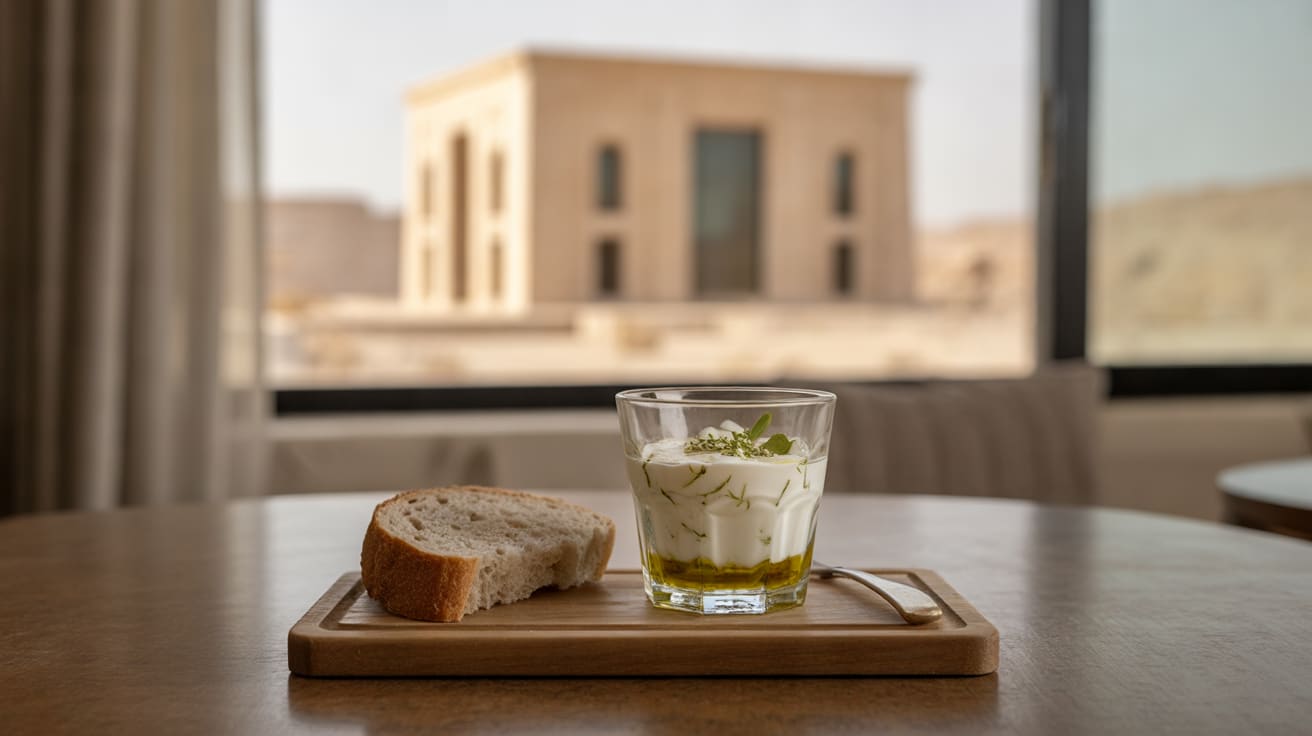
- Post-Tarawih snack: If you pray Tarawih, follow it with a protein-rich snack: a handful of nuts, a cheese sandwich, or labneh with olive oil.
- Quality matters: Prioritize complete proteins—animal sources, soy, or combinations of legumes and grains—that provide all essential amino acids to maximize MPS.
Saudi Context: Traditional Foods That Help
Saudi cuisine offers excellent protein-distribution options. At suhoor, consider ful medames (fava beans) with eggs, or labneh with whole-grain bread. At iftar, grilled chicken or fish provides lean protein without the heavy fats of fried foods. Jareesh (crushed wheat with yogurt) is a traditional dish that combines complex carbohydrates with dairy protein.
Dates, while traditional for breaking the fast, contain minimal protein (about 2g per 100g). They provide quick energy but should not be relied on as a protein source. Pair them with yogurt, milk, or nuts to create a balanced mini-meal.
Limitations and Honest Caveats
The Yasuda study focused on young men undergoing resistance training. Older adults, women, and sedentary individuals may have different protein needs and responses. The anabolic resistance that comes with aging means older adults may need even more protein per meal to trigger MPS—making distribution even more critical.
Ramadan studies are also limited by small sample sizes and short duration. Most last 4 weeks, not long enough to capture adaptations in muscle mass or metabolic health. The basketball study cited above involved only 12 players.
Finally, protein distribution is one piece of the puzzle. Total calorie intake, hydration, sleep quality, and training status all influence muscle health during Ramadan. No amount of protein timing will compensate for severe caloric restriction or dehydration.
Key Takeaways
- Evenly distributed protein intake (25-30g per meal) enhances muscle growth more than skewed patterns, even with identical total intake.
- Traditional Ramadan eating—heavy iftar, light suhoor—creates a protein-skewed pattern that may limit muscle protein synthesis.
- Aim for 25-30g protein at suhoor, split iftar into two moderate meals, and add a post-Tarawih protein snack.
- Prioritize complete protein sources: eggs, dairy, lean meats, fish, soy, or legume-grain combinations.
- Traditional Saudi foods like ful medames, labneh, and jareesh support balanced protein distribution.
Sources
- Yasuda J, Tomita T, Arimitsu T, Fujita S. “Evenly Distributed Protein Intake over 3 Meals Augments Resistance Exercise–Induced Muscle Hypertrophy in Healthy Young Men.” The Journal of Nutrition. 2020;150(7):1845-1851. doi:10.1093/jn/nxaa101
- Brini S, Ardigò LP, Clemente FM, et al. “Increased game frequency period crossing Ramadan intermittent fasting decreases fat mass, sleep duration, and recovery in male professional basketball players.” PeerJ. 2023;11:e16507. doi:10.7717/peerj.16507
For more on fasting and nutrition, see our guide to autophagy and dawn-to-dusk fasting.
Explore more about Ramadan fasting and training in our evidence-based hub.
The Active Arabia weekly
One article built on one named study, every week, in your inbox. No noise.
We never share your email. Unsubscribe in one click.