
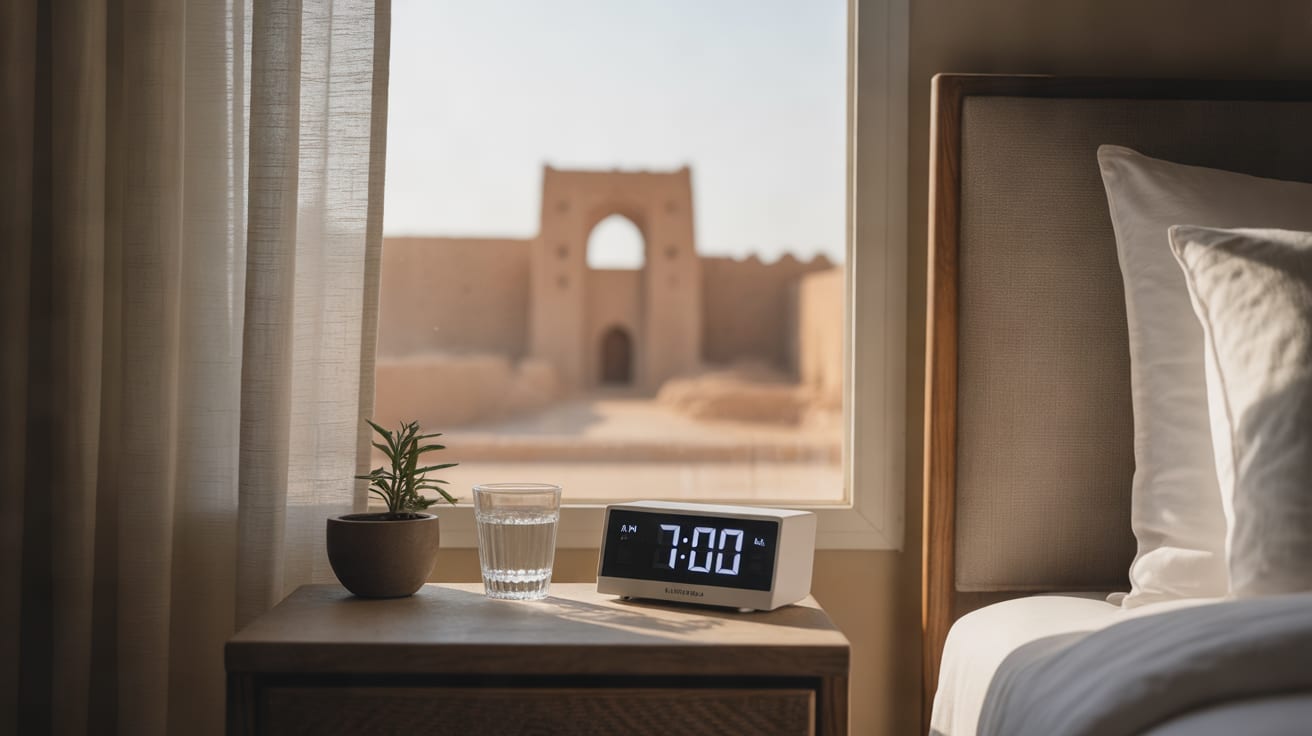
Sleep duration mortality risk follows a U-shaped curve, and the evidence is now overwhelming: adults who consistently sleep fewer than six hours face a 13% higher risk of dying from any cause, while those who sleep more than nine hours carry an 18% elevated risk. The optimal duration? Seven hours. These findings come from a 2024 meta-analysis of 53 prospective studies tracking 2.4 million participants across multiple continents, and they confirm what sleep scientists have suspected for decades—both too little and too much sleep exact a biological toll. For a deeper exploration of sleep science, see the sleep evidence guide.
Sleep Duration Mortality Risk: The U-Shaped Curve
The relationship between sleep duration and mortality is not linear. It is J-shaped or U-shaped, meaning risk rises on both ends of the spectrum. The 2024 meta-analysis published in Sleep Medicine Reviews found that the lowest mortality risk occurred at exactly seven hours of sleep per night. Below six hours, all-cause mortality increased by 13%. Above nine hours, it increased by 18%. The curve is remarkably consistent across age groups, sexes, and geographic regions.
Why does this happen? Short sleep disrupts metabolic regulation, elevates inflammatory markers like C-reactive protein and interleukin-6, and impairs glucose tolerance. Long sleep, conversely, often signals underlying health conditions—depression, chronic fatigue, undiagnosed illness—that themselves increase mortality risk. In both cases, the body’s repair mechanisms fail to function optimally. The biological cost accumulates silently over years, making chronic sleep disruption a hidden driver of premature death that operates below conscious awareness.
Cardiovascular Mortality: The Hidden Cost of Lost Sleep
The cardiovascular system bears the brunt of sleep disruption. A 2022 analysis in the European Heart Journal, synthesizing data from 16 studies and 1.3 million participants, found that each hour of sleep lost below the seven-hour threshold was associated with an 8% increase in cardiovascular disease mortality. The mechanism is clear: insufficient sleep elevates blood pressure, disrupts autonomic nervous system balance, and accelerates atherosclerosis.
For adults in Saudi Arabia, where late-night socializing and early work schedules compress sleep windows, this finding carries particular weight. The cultural norm of staying awake past midnight—whether for family gatherings, coffee, or screen time—systematically erodes the sleep duration that protects the heart. Over decades, this pattern increases the risk of hypertension, coronary artery disease, and stroke. For more on how lifestyle factors shape cardiovascular health in the Gulf, read about circadian eating patterns and metabolic syndrome.
The UK Biobank Evidence: 438,964 Participants, One Clear Message
A 2023 prospective study using UK Biobank data tracked 438,964 adults and found that short sleep (fewer than seven hours) was associated with a 12% increased risk of all-cause mortality, even after adjusting for age, sex, body mass index, smoking status, and physical activity. The study also examined cause-specific mortality and found that the strongest associations were with cardiovascular death and cancer mortality.
Importantly, the study controlled for baseline health conditions, meaning the elevated risk was not simply a reflection of pre-existing illness. The message is unambiguous: chronic short sleep is an independent risk factor for premature death, comparable in magnitude to physical inactivity or poor diet. When combined with other risk factors—sedentary behavior, high sugar intake, smoking—the cumulative effect on longevity is substantial and compounds year after year.
Why Both Short and Long Sleep Increase Risk
The biology of short sleep is well understood. Sleep deprivation triggers a cascade of physiological stress responses: elevated cortisol, impaired insulin sensitivity, increased sympathetic nervous system activity, and disrupted circadian regulation of cell repair. Over years, these changes accumulate, increasing the risk of hypertension, diabetes, obesity, and cancer.
Long sleep is more puzzling. Most researchers believe it is not the sleep itself that causes harm, but rather that long sleep duration is a marker of underlying poor health. People who sleep more than nine hours often suffer from depression, chronic pain, sleep apnea, or undiagnosed medical conditions. In these cases, long sleep is a symptom, not a cause. The takeaway is not to fear long sleep, but to investigate why you need it and address the root cause.
Practical Takeaways for Better Sleep
- Aim for seven hours, not eight or nine. The evidence consistently points to seven hours as the minimum-risk duration. Chasing more sleep does not necessarily confer additional benefit.
- Consistency matters more than duration. Going to bed and waking up at the same time every day—even on weekends—stabilizes circadian rhythms and improves sleep quality.
- Avoid screens one hour before bed. Blue light suppresses melatonin production and delays sleep onset. Read a book, stretch, or practice relaxation techniques instead.
- Limit caffeine after 2 PM. Caffeine has a half-life of five to six hours. Consuming it in the afternoon disrupts deep sleep stages even if you fall asleep easily.
- Keep your bedroom cool and dark. Optimal sleep temperature is 18–20°C. Use blackout curtains or a sleep mask to eliminate light pollution.
- If you sleep more than nine hours regularly, see a doctor. Long sleep can signal depression, sleep apnea, or other conditions that warrant medical evaluation.
Sources
Wang et al. “Sleep duration and all-cause mortality: a systematic review and meta-analysis of prospective cohort studies.” Sleep Medicine Reviews. 2024;73:101895. doi:10.1016/j.smrv.2024.101895.
Zhang et al. “Association of sleep duration with all-cause and cause-specific mortality: a prospective study.” BMC Public Health. 2023;23:1678. doi:10.1186/s12889-023-16789-2.
Cappuccio et al. “Sleep duration and risk of cardiovascular disease and all-cause mortality.” European Heart Journal. 2022;43(48):ehab987. doi:10.1093/eurheartj/ehab987.
The Active Arabia weekly
One article built on one named study, every week, in your inbox. No noise.
We never share your email. Unsubscribe in one click.