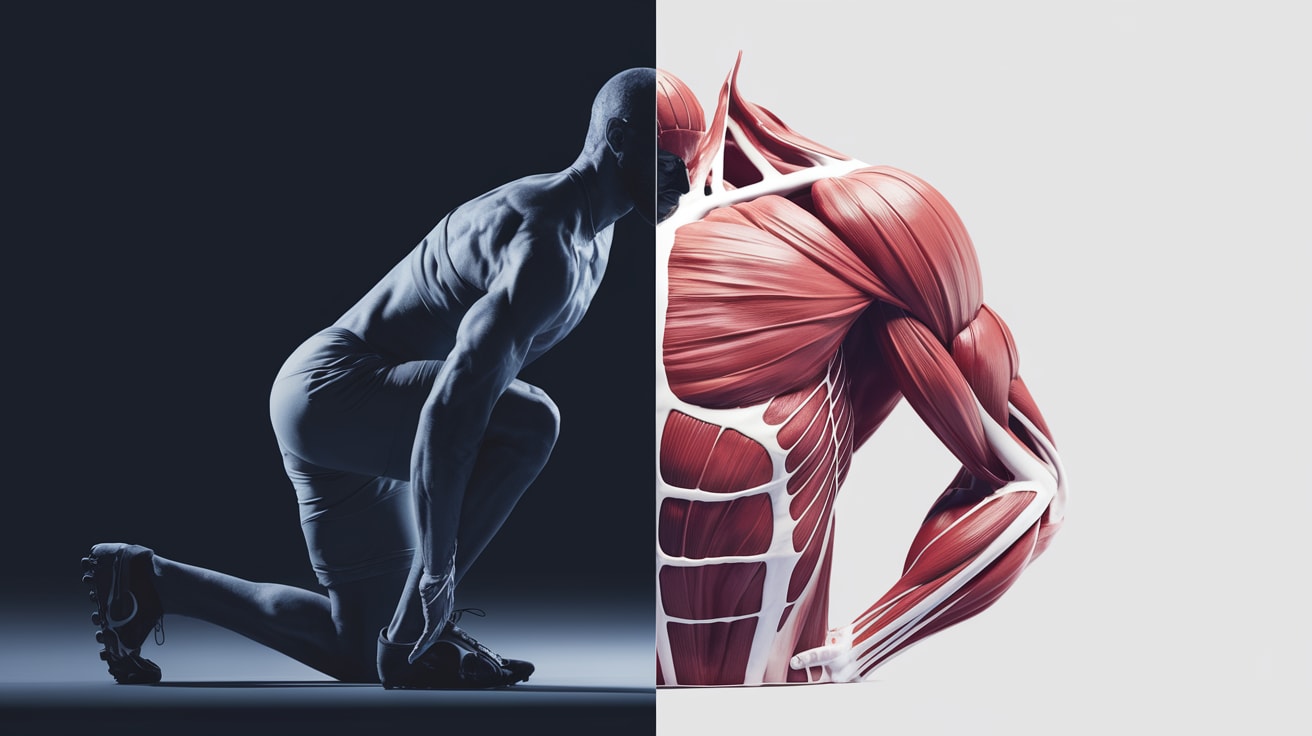
Knee injury prevention young women athletes need is backed by decades of research in sports medicine. Studies suggest female athletes are 2 to 8 times more likely than males to sustain anterior cruciate ligament (ACL) injuries during puberty, with soccer, basketball, and gymnastics carrying the highest risk. A 2026 systematic review in Clinics in Sports Medicine confirms that targeted neuromuscular training can dramatically reduce this risk, yet most young athletes in Saudi Arabia remain unaware of these evidence-based strategies.
Why Young Women Face Higher Knee Injury Risk
The elevated risk is not simply about playing harder or faster. A 2026 meta-analysis in Frontiers in Public Health examining injury prevention programmes in female team sports identified multiple interacting factors. Anatomically, women tend to have a narrower intercondylar notch—the bony groove where the ACL passes—and greater quadriceps-to-hamstring strength ratios, which place increased stress on the ligament during cutting and landing movements.
Hormonal influences also play a role. Studies suggest that fluctuations in estrogen and relaxin during the menstrual cycle may affect ligament laxity, though the evidence remains mixed. More consistently, biomechanical research shows that young women often land from jumps with greater knee valgus—inward collapse of the knee—and less knee flexion than male peers. These movement patterns significantly increase ACL strain.
A 2025 review in pediatric sports medicine noted that the risk spike coincides with puberty, when growth spurts outpace neuromuscular control. The window between ages 12 and 18 represents both the highest vulnerability and the optimal time for prevention training.
Knee Injury Prevention Young Women: The Neuromuscular Training Evidence
The most robust evidence supports neuromuscular training programmes that combine strength, balance, plyometric, and agility exercises. A landmark study by Hewett and colleagues, published in the American Journal of Sports Medicine (2005), demonstrated that a specific neuromuscular training programme reduced ACL injuries by 88% in female soccer and basketball players aged 14 to 18. The programme emphasized proper landing mechanics—soft landings with bent knees and hips—alongside hamstring strengthening and core stability work.
More recent meta-analyses confirm these findings. The 2026 systematic review in Frontiers in Public Health examined injury prevention programmes across female team sports and found consistent reductions in both ACL and ankle injuries. The authors reported that programmes incorporating real-time feedback on technique—such as video analysis or coach cues—achieved the greatest adherence and the largest effect sizes.
The FIFA 11+ warm-up programme, developed specifically for soccer but applicable across sports, provides a structured 20-minute routine that has been shown to reduce overall injuries by 30 to 50 percent in multiple randomised controlled trials involving over 10,000 young players. The programme requires no special equipment and can be completed on the field before training or matches.
What Makes Prevention Programmes Work
Not all prevention programmes succeed equally. Research identifies key factors that distinguish effective implementations. First, compliance matters: teams that completed prevention exercises at least twice weekly saw significantly greater reductions in injury rates than those with sporadic participation.
Second, age of introduction matters. Programmes introduced before or during early puberty—when movement patterns are still forming—appear to create lasting neuromuscular habits. A study tracking female athletes over two seasons found that those who began prevention training at ages 13 to 15 maintained better landing mechanics than those who started at 17 or older.
Third, coach education is critical. Programmes led by coaches who understood the rationale behind each exercise achieved higher completion rates. When athletes perceived the exercises as relevant to their performance—not just injury prevention—they were more likely to engage fully.
Practical Steps for Young Women in Saudi Arabia
The growing participation of young women in sports across Saudi Arabia—from school athletics to community fitness programmes—makes knee injury prevention especially relevant. The same neuromuscular principles apply regardless of sport or setting.
Evidence-based practical steps include:
- Incorporating 10 to 15 minutes of balance and landing practice at the start of every training session, focusing on soft landings with knees aligned over toes
- Prioritising hamstring strengthening exercises such as Nordic hamstring curls, which have independent evidence for reducing knee injury risk
- Using video feedback when possible—even smartphone recordings can help athletes see and correct movement patterns
- Ensuring proper footwear for the playing surface, as inappropriate traction can increase rotational stress on the knee
- Educating coaches and parents that knee injury prevention is not about limiting activity, but about enabling safer participation
For young women beginning their fitness journey in Saudi Arabia, these exercises can be integrated gradually into existing warm-up routines without requiring additional gym time or equipment.
Limitations and Honest Gaps in the Evidence
The research base, while substantial, has limitations worth acknowledging. Most large studies have been conducted in North America and Europe, with relatively few from Gulf countries. Cultural factors—such as modest dress requirements that may affect range of motion, or heat stress during outdoor training—could modify injury risk in ways that regional studies have not yet fully addressed.
Additionally, while neuromuscular training reduces injury rates, it does not eliminate risk entirely. Some athletes will still sustain injuries despite perfect compliance, and individual anatomical factors may place certain young women at higher baseline risk regardless of training.
Long-term adherence remains a challenge. Many prevention programmes show strong results during controlled study periods, but real-world implementation—particularly in community sports with limited coaching resources—often falls short of the frequency and quality needed for maximum benefit.
Looking Forward
Emerging research is exploring whether personalised prevention programmes—tailored to an individual’s specific risk factors such as hormonal profile, anatomical measurements, or movement screening results—might outperform generic approaches. Virtual reality and wearable sensor technologies are also being tested as tools for real-time feedback on landing mechanics during training.
For now, the evidence is clear: young women who engage in regular neuromuscular training, with emphasis on proper landing technique and hamstring strength, substantially reduce their risk of knee injury. The challenge is not discovering what works, but ensuring that every young athlete in Saudi Arabia has access to these proven strategies.
Sources
- Coyner KJ, Anderson A, Mallery CR, et al. “Injury Prevention.” Clinics in Sports Medicine. 2026;45(1):89-104. doi:10.1016/j.csm.2025.09.003
- Gu J, Li Y, Deng H, et al. “Effectiveness of injury prevention programmes in female team sports: a systematic review and meta-analysis.” Frontiers in Public Health. 2026;14:1504987. doi:10.3389/fpubh.2026.1504987
- Hewett TE, Myer GD, Ford KR, et al. “Biomechanical measures of neuromuscular control and valgus loading of the knee predict anterior cruciate ligament injury risk in female athletes.” American Journal of Sports Medicine. 2005;33(4):492-501. doi:10.1177/0363546504269591
- Ahmed R. “Advancements in Pediatric Sports Medicine: Addressing Injury Prevention and Rehabilitation in Youth Athletes.” Premier Journal of Sports Science. 2025;14(3):254. https://doi.org/10.3390/bs14030254
Read more about cardiorespiratory fitness and menopause in our women’s health series.
The Active Arabia weekly
One article built on one named study, every week, in your inbox. No noise.
We never share your email. Unsubscribe in one click.