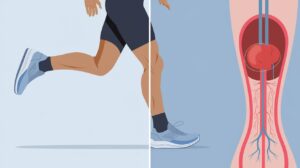
A recent study published in Scientific Reports in 2026 examined the impact of planned pre-iftar walking on cardiometabolic health markers during Ramadan. The study, which included 112 university students, found that the group who walked for approximately one hour before iftar showed greater reductions in weight and BMI compared to the comparison group, although these differences did not remain statistically significant after correction for multiple testing.
These findings come at a time when many people are looking for healthy ways to maintain their fitness during Ramadan, when eating, sleep, and physical activity patterns change dramatically. But what do these results mean for those fasting in Saudi Arabia and the Gulf?
Study Details: Rigorous Scientific Methodology
Researchers at An-Najah National University in Palestine conducted an observational study during Ramadan 2022, measuring cardiometabolic indicators before and after the holy month. Participants were divided into two groups: 32 students who committed to planned walking for approximately one hour before iftar, 4-7 days per week, and 80 students who formed the comparison group.
Measurements included weight, BMI, waist circumference, blood pressure, heart rate, fasting glucose, C-reactive protein, triglycerides, HDL cholesterol, HbA1c, and sleep duration. Researchers used mobile phone applications to accurately record daily step counts.
Results: Notable Reductions in Weight and BMI
Unadjusted analyses showed that the planned walking group experienced greater weight reduction of 1.46 ± 1.59 kg compared to 0.53 ± 2.01 kg in the comparison group (p=0.024). BMI also decreased by 0.56 ± 0.61 kg/m² compared to 0.19 ± 0.76 kg/m² (p=0.018).
However, when applying false discovery rate correction for multiple testing, these differences did not remain statistically significant (q=0.153 for both indicators). In baseline-adjusted models, planned walking was not significantly associated with post-Ramadan weight (B=-0.82 kg, 95% CI -1.69 to 0.05, p=0.064) or BMI (B=-0.33 kg/m², 95% CI -0.67 to 0.02, p=0.063).
What About Daily Step Count?
Interestingly, daily step count recorded via mobile applications for 68 participants was not significantly associated with changes in cardiometabolic indicators, whether in correlation analyses or adjusted models. This suggests that the type and timing of activity may be more important than just the total number of steps.
Researchers note that planned pre-iftar walking differs from random activity throughout the day, as it occurs in the pre-breaking-fast period, which may affect the body’s response to food after iftar.
Saudi and Gulf Context: Practical Application
In Saudi Arabia, where Ramadan habits vary, these results can be applied in practical ways. Pre-iftar walking requires no special equipment or gym memberships, making it accessible to everyone.
Public parks in Saudi cities such as King Abdullah Park in Riyadh or the Jeddah Corniche can be used for pre-iftar walking. The moderate evening weather during Ramadan also makes physical activity enjoyable and comfortable.
This practice aligns with Ramadan hydration strategies, as you can drink water immediately after walking before iftar, which replenishes lost fluids and improves performance.
Limitations: What the Study Didn’t Tell Us
Despite the importance of the results, they must be interpreted with caution. First, the study is observational, not a randomized controlled trial, meaning other factors may explain the differences. Second, the sample size is limited (112 participants), and differences did not remain significant after statistical correction.
Third, the study did not measure participants’ dietary intake during iftar, which is a crucial factor in metabolic changes. Fourth, the study included only healthy university students, and results may differ for older adults or those with chronic diseases.
Fifth, the study relied on self-reported planned walking, which may be subject to recall bias. Finally, the follow-up period was only Ramadan, and we do not know if these effects persist long-term.
Mechanisms: Why Pre-Iftar Walking?
Researchers explain that pre-iftar walking improves insulin sensitivity, helping the body process glucose more efficiently when breaking the fast. Moderate physical activity also stimulates circulation and increases blood flow to muscles, which may improve nutrient absorption after the meal.
Additionally, pre-iftar walking helps regulate appetite. Previous studies have shown that moderate physical activity reduces ghrelin (the hunger hormone), which may prevent overeating at iftar. This is particularly important in Ramadan, when many people tend to consume large quantities of food after long hours of fasting.
Practical Recommendations for Those Fasting
- Start with 20-30 minutes of walking before iftar, then gradually increase to one hour if you feel comfortable.
- Choose an appropriate time 30-60 minutes before iftar, so you have time to rest and drink water before eating.
- Focus on moderate-paced walking, not brisk walking or running, especially if you have been fasting for long hours.
- Drink two cups of water immediately after walking, then wait 10-15 minutes before iftar.
- Listen to your body: if you feel dizzy or extremely fatigued, stop and rest.
- Make walking a social activity with family or friends to increase adherence.
It is worth noting that pre-iftar walking is not a new practice in Arab culture, but was part of traditional Ramadan habits. People used to walk to mosques for prayer and visit relatives and neighbors before breaking their fast. Today, we can revive this healthy habit with a scientifically informed approach.
Sources
- Al-Lahham S, Hayek M, Zabin LM, et al. “Associations of planned pre-iftar walking and Ramadan step count with cardiometabolic changes among Palestinian university students.” Scientific Reports. 2026. doi:10.1038/s41598-026-75651-5
Studies suggest that moderate physical activity during Ramadan can support metabolic health, but preliminary results need further research to confirm long-term benefits.
The Active Arabia weekly
One article built on one named study, every week, in your inbox. No noise.
We never share your email. Unsubscribe in one click.