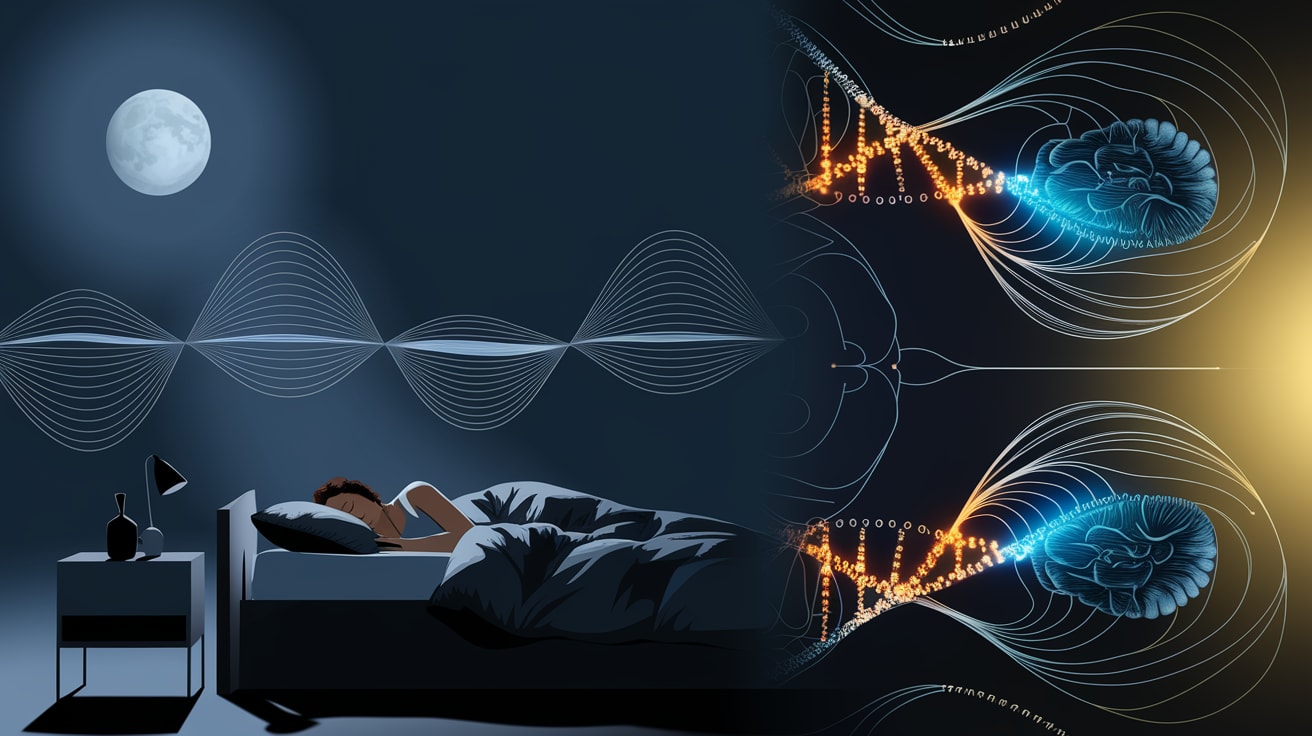
A landmark 2026 study published in PLOS Medicine has revealed that healthy sleep patterns—particularly more REM and deep sleep—are associated with substantially lower risks of dozens of diseases. The research, which tracked 95,559 UK Biobank participants for a median of 8.9 years, found that greater REM sleep was linked to reduced risks of 83 conditions, including dementia, heart failure, and Parkinson’s disease. The findings suggest that sleep architecture, not just duration, plays a critical role in long-term health.
How the Study Measured Healthy Sleep Patterns
Unlike previous research that relied on self-reported sleep questionnaires, this study used wrist-worn accelerometers to objectively measure sleep patterns over seven consecutive days and nights. Researchers applied a deep-learning algorithm called SleepNet, which was trained on over 1,100 nights of laboratory-based polysomnography data, to classify sleep stages including REM, deep (N3), and light sleep. The algorithm also calculated total sleep duration, wakefulness after sleep onset (WASO), and night-to-night sleep irregularity.
This approach provided a more accurate picture of real-world sleep behavior than traditional methods. As the authors noted, self-reported sleep measures often show poor correlation with objective assessments, making it difficult to capture actual sleep patterns. The UK Biobank cohort, comprising adults aged 40-73 years at enrollment, offered an unprecedented opportunity to examine how objectively measured sleep relates to long-term health outcomes across more than 1,000 disease categories.
REM Sleep Shows the Strongest Protective Association
The study’s most striking finding was the association between REM sleep and disease risk. For every additional 47.6 minutes of REM sleep (one interquartile range increase), participants showed lower risks of 83 diseases across 12 categories. The protective associations were particularly strong for neurological and cardiovascular conditions:
- Dementia: hazard ratio 0.54 (95% CI [0.47, 0.62])
- Parkinson’s disease: hazard ratio 0.20 (95% CI [0.11, 0.39])
- Alzheimer’s disease: hazard ratio 0.69 (95% CI [0.57, 0.81])
- Heart failure: hazard ratio 0.74 (95% CI [0.68, 0.80])
- Atrial fibrillation: hazard ratio 0.83 (95% CI [0.79, 0.86])
- Ischemic heart disease: hazard ratio 0.87 (95% CI [0.83, 0.92])
These hazard ratios indicate that participants with more REM sleep had 20-80% lower risks of developing these conditions compared to those with less REM sleep, after adjusting for demographic characteristics, lifestyle factors, and environmental exposures. The authors emphasized that while the associations are strong, the observational design means causation cannot be inferred—people with more REM sleep may have other protective factors.
Deep Sleep Linked to Lower Diabetes and Depression Risk
While REM sleep showed the broadest protective pattern, deep sleep (N3 stage) was associated with lower risks of seven specific conditions. For every additional 47.5 minutes of deep sleep, participants showed reduced risks of:
- Type 2 diabetes: hazard ratio 0.89 (95% CI [0.85, 0.93])
- Major depressive disorder: hazard ratio 0.86 (95% CI [0.82, 0.91])
- Sleep apnea: hazard ratio 0.78 (95% CI [0.71, 0.86])
- Parkinson’s disease: hazard ratio 0.70 (95% CI [0.62, 0.80])
The finding that deep sleep is linked to lower diabetes risk aligns with previous research showing that slow-wave sleep plays a role in glucose metabolism and insulin sensitivity. The association with depression is also consistent with evidence that sleep disruption is both a symptom and a potential contributor to mood disorders. However, the authors cautioned that the relatively narrow range of conditions linked to deep sleep (compared to REM) suggests different sleep stages may serve different protective functions.
The 6-8 Hour Sweet Spot for Sleep Duration
The study confirmed that total sleep duration shows a non-linear relationship with disease risk. Using restricted cubic spline analysis, researchers found that the lowest-risk duration for 69 out of 86 disease phenotypes was concentrated within a 6-to-8-hour window. This finding aligns with current sleep guidelines from major health organizations, which recommend 7-9 hours for adults.
Participants sleeping less than 5 hours per night faced the most elevated clinical vulnerability, with increased risks of 37 conditions compared to the 6-8 hour reference group. The authors noted that extreme short sleepers showed “the most widespread clinical vulnerabilities, accounting for 37 of the 41 identified significant adverse associations.” Interestingly, the study did not find strong protective effects for long sleep duration (beyond 8 hours), suggesting that the quality and architecture of sleep within the 6-8 hour window may be more important than simply sleeping more.
Sleep Irregularity and Fragmentation Carry Hidden Risks
Beyond sleep stages and duration, the study revealed that sleep irregularity (defined as the standard deviation of daily sleep duration) and wakefulness after sleep onset (WASO) were independently linked to higher disease risks. Greater sleep irregularity was associated with increased risks of anxiety disorders (hazard ratio 1.23), major depressive disorder (hazard ratio 1.26), and abdominal pain (hazard ratio 1.13).
Higher WASO—meaning more time spent awake after initially falling asleep—was linked to elevated risks of psychoactive substance dependence (hazard ratio 1.33), alcohol abuse (hazard ratio 1.22), and osteoarthritis (hazard ratio 1.05). These findings highlight that consistent, consolidated sleep matters for health, not just the total hours in bed. For individuals in Saudi Arabia and the Gulf region, where late-night socializing and irregular schedules are common, maintaining a consistent sleep-wake cycle may be as important as getting enough hours.
Practical Takeaways for Better Sleep
Based on these findings, here are evidence-based strategies to improve sleep architecture:
- Prioritize consistency: Go to bed and wake up at the same time every day, even on weekends. The study showed that sleep irregularity was independently linked to higher anxiety and depression risk.
- Aim for 6-8 hours: The lowest disease risk was concentrated in this window. Sleeping less than 5 hours was associated with widespread vulnerabilities.
- Protect REM sleep: Avoid alcohol before bed, as it suppresses REM sleep. Maintain a cool, dark bedroom environment to support natural sleep cycles.
- Support deep sleep: Regular physical activity during the day has been shown to increase deep sleep. Avoid heavy meals and intense exercise within 2-3 hours of bedtime.
- Limit sleep fragmentation: Reduce nighttime light exposure, manage stress through relaxation techniques, and address sleep disorders like sleep apnea if present.
- Track objectively if possible: Consumer wearables can provide insights into sleep patterns, though the study used research-grade accelerometers. Focus on trends rather than nightly perfection.
Study Limitations and Context
The authors acknowledged several important limitations. First, the observational design means the study cannot prove that sleep patterns directly cause disease risk—residual confounding may remain. People with more REM sleep may have other healthy behaviors or genetic factors that protect them. Second, the cohort was predominantly white (96.9%), limiting generalizability to other ethnic groups. Third, the accelerometer-based sleep staging algorithm, while validated, showed modest agreement with gold-standard polysomnography (F1 score 0.49 for REM/NREM/wake classification).
However, the study’s strengths are substantial: the large sample size, objective sleep measurement over seven days, long follow-up period, and comprehensive disease outcome ascertainment through electronic health records. The phenome-wide approach—examining over 1,000 disease outcomes—provides a systematic foundation for future research into sleep and health.
Sources
- Luo J, Liu R, Yin J, Cao W, Sun S, Chen R. “Accelerometer-derived real-world sleep stages and risk of incident diseases: A UK Biobank cohort study and phenome-wide association analysis.” PLOS Medicine. 2026;23(9):e1005213. doi:10.1371/journal.pmed.1005213
- PLOS. “More REM sleep linked to lower risk of 83 diseases.” ScienceDaily. September 23, 2026. https://www.sciencedaily.com/releases/2026/09/260923035930.htm
For more insights on healthy lifestyle and prevention strategies, explore our comprehensive guides. If you’re interested in how daily habits impact long-term health, you may also find our article on circadian eating patterns and metabolic health relevant.
The Active Arabia weekly
One article built on one named study, every week, in your inbox. No noise.
We never share your email. Unsubscribe in one click.