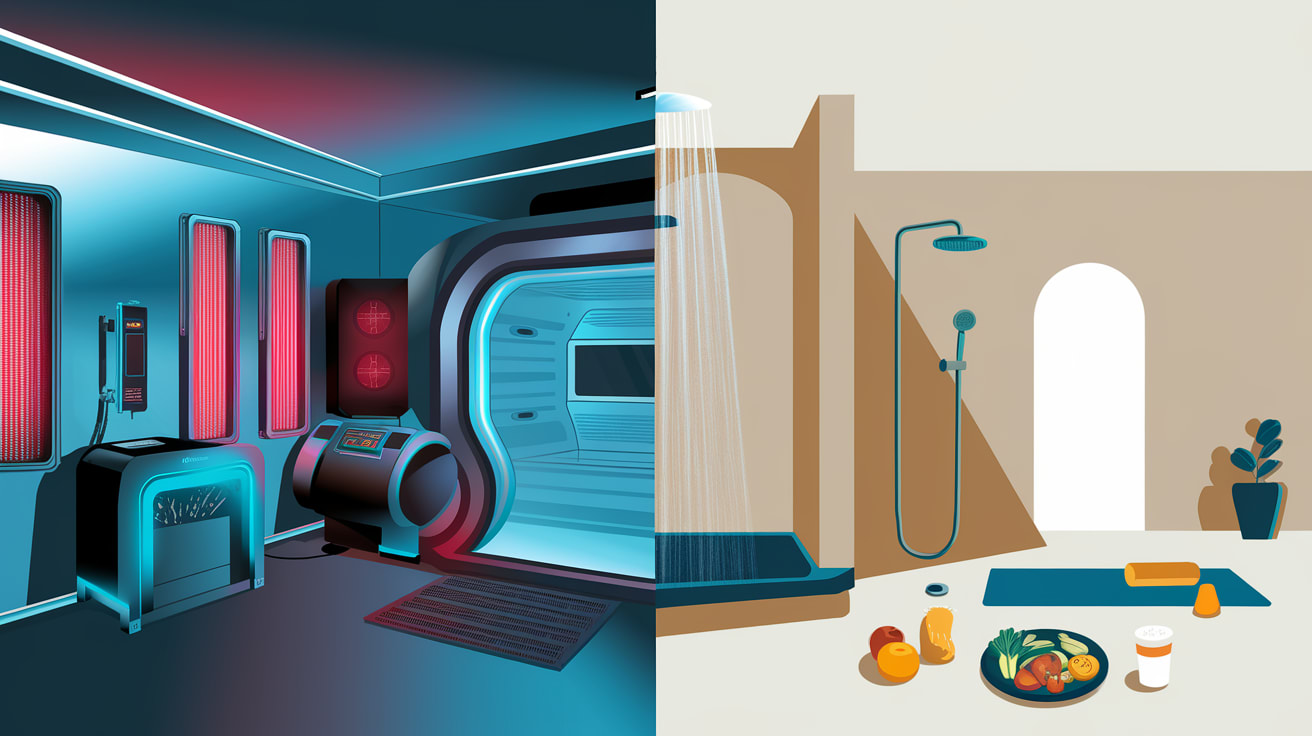
When it comes to cold hot water immersion recovery athletes face a complex choice. Recent research suggests the truth is more nuanced than most believe. A comprehensive scientific analysis published in 2026 revealed surprises that might change how you recover after exercise, especially in hot climates like Saudi Arabia.
Cold Hot Water Immersion Recovery Athletes: What Researchers Studied
A research team from Colombia published a systematic review in Frontiers in Sports and Active Living in July 2026, analyzing 8 randomized controlled trials involving athletes, soccer players, swimmers, and cyclists across multiple countries. These studies compared the effects of cold water immersion (8-15 degrees Celsius) and hot water immersion (38-42 degrees Celsius) on various recovery markers including muscle soreness, performance, and biochemical indicators.
The goal was to determine which method better reduces delayed onset muscle soreness (DOMS), restores explosive power, reduces muscle damage markers like creatine kinase (CK), improves inflammatory markers, and enhances sleep quality after intense training sessions.
First Surprise: No Clear Difference in Pain Reduction
The systematic review revealed a surprising result: neither cold water immersion nor hot water immersion significantly reduced delayed onset muscle soreness compared to passive recovery. This challenges the widespread belief among athletes that cold water is the magic solution for post-exercise recovery.
However, researchers found important differences in other markers. Hot water immersion significantly improved sleep quality and increased acute anaerobic power output, while cold water immersion impaired immediate power production and elevated heat shock protein HSP-72 levels, indicating cellular stress response.
Hot Water: Better Sleep and Stronger Performance
Results showed that chronic hot water immersion reduced creatine kinase (CK) levels, a key marker of muscle damage, and increased testosterone levels over time. These findings suggest hot water may be superior for long-term recovery and training adaptation.
Physiologically, hot water causes vasodilation, increasing blood flow to muscles by expanding blood vessel diameter. This enhanced circulation helps remove metabolic waste products accumulated during exercise and delivers fresh oxygen and nutrients needed for tissue repair and rebuilding.
For athletes in Saudi Arabia, where high temperatures are common throughout much of the year, hot water may be a practical evening recovery option, especially since it improves sleep quality. Better sleep means better hormonal balance, faster recovery, and improved next-day performance, making it particularly valuable during training camps in NEOM, Riyadh, or the Eastern Province.
Cold Water: Cellular Adaptation but Immediate Weakness
In contrast, cold water immersion elevated HSP-72 protein levels, indicating cellular adaptation to thermal stress. But cold water significantly impaired immediate explosive power, making it a poor choice if you have training or competition the same day or the following morning.
Cold water causes vasoconstriction, reducing swelling and inflammation in damaged tissues, but also limiting blood flow to working muscles. This reduced circulation may slow the repair process long-term, even though it temporarily relieves pain through numbing effects on nerve endings.
A 2025 study by Gustafsson and colleagues, which included 40 national-level Swedish soccer players tracked over 15 weeks, confirmed that neither cold nor hot water was better than placebo for restoring physical performance markers like sprint speed, jump height, or strength during a competitive season.
What Does This Mean for Athletes in Saudi Arabia?
For athletes training in hot climates in NEOM, Jeddah, or Riyadh, post-exercise recovery requires a smart, individualized strategy. Results indicate the choice depends on your specific goal and timeline:
- If you need rapid recovery for same-day or next-day competition: avoid both cold and hot water, rely on active recovery such as light walking for 10-15 minutes, gentle stretching, and proper hydration with electrolytes.
- If you want to improve sleep quality and long-term recovery between training sessions: hot water (38-40 degrees Celsius) for 10-15 minutes in the evening may be the better choice, especially during intensive training blocks.
- If you aim for cellular adaptation and heat stress tolerance: cold water (10-15 degrees Celsius) for 5-10 minutes between sessions, but never before upcoming competition when power output matters.
The Bottom Line: No Single Magic Solution
Post-exercise recovery is not a black box with one answer. Cold and hot water have distinctly different physiological effects, and the optimal choice depends on timing of your next training session, sleep quality priorities, and the specific performance type required. The 2026 systematic review confirms context is king when it comes to recovery modalities. There is no one-size-fits-all solution that works for every athlete in every situation.
For athletes in the Kingdom, heat adaptation requires smart recovery strategies tailored to individual needs and training schedules. Try hot water in the evening to improve sleep and reduce muscle damage markers, avoid cold water before competitions to maintain explosive power, and consult your coach or sports nutritionist to develop a personalized plan that fits your specific training goals and competition calendar.
Practical Tips for Heat Recovery
- Drink 500 ml of water with electrolytes within 30 minutes after training to replace fluid lost through sweat
- Use hot water (38-40 degrees Celsius) in the evening to improve sleep quality and support long-term recovery between sessions
- Avoid cold water immersion at least 24 hours before competition to maintain explosive power and muscle function
- Rely on active recovery such as a 10-15 minute easy walk as a safe, effective option in most training situations
- Monitor heat exhaustion signs carefully: dizziness, nausea, stopped sweating, confusion. Seek medical help immediately if these occur
Sources
- Bustos Carvajal J, Pérez Hurtado E, Bustos Carvajal M, Celis Villamizar DM, Arias Coronel F. “Effects of post-exercise hot and cold-water immersion on performance recovery and physiological markers in athletes: a systematic review.” Frontiers in Sports and Active Living. 2026;8:1794029. doi:10.3389/fspor.2026.1794029
- Gustafsson J, Montiel-Rojas D, Romare MGA, et al. “Cold- and hot-water immersion are not more effective than placebo for the recovery of physical performance and training adaptations in national level soccer players.” Eur J Appl Physiol. 2025;125(11):3179-3194. doi:10.1007/s00421-025-05835-w
For more information on heat training, see the Training and Hydration in Extreme Heat guide. To learn more about electrolyte replacement, read Sweat Test Electrolyte Replacement: 2026 Study.
The Active Arabia weekly
One article built on one named study, every week, in your inbox. No noise.
We never share your email. Unsubscribe in one click.