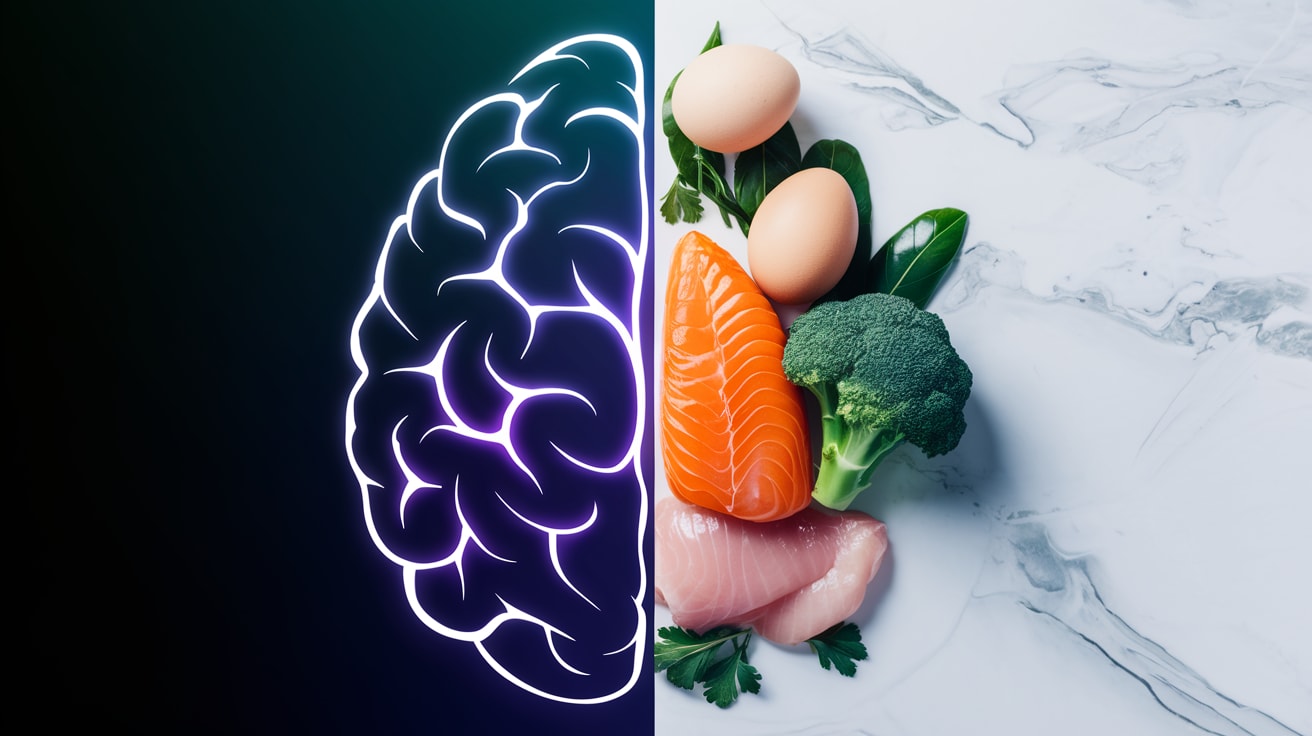

The relationship between diet and depression moved from a fringe idea to mainstream research in January 2017, when Australian scientists published the results of the SMILES trial in the journal BMC Medicine. Led by Professor Felice Jacka of Deakin University’s IMPACT Strategic Research Centre, it was the first randomized controlled trial designed to test whether dietitian-delivered dietary improvement could treat adults with a major depressive episode. The headline finding was striking: participants who received seven sessions of nutritional support improved far more on standard depression measures than those who received an equal dose of social support, and about one in three of them reached remission.
Why scientists started asking whether food could treat depression
For most of the history of modern psychiatry, mood disorders have been treated almost exclusively with psychotherapy, medication, or both. Yet depression remains, in the words of the SMILES researchers, a highly prevalent mental disorder, and for a substantial share of people the available treatments bring only partial relief or are difficult to access. Meanwhile, observational studies kept pointing in an intriguing direction: populations reporting healthier dietary patterns also tended to report fewer depressive symptoms. Observational data cannot prove that food causes or cures depression — people who eat well may also move more, sleep better, or enjoy greater financial security. Still, the consistency of the association was enough to justify a harder test: a clinical trial in which diet itself is the intervention.
How the SMILES trial tested dietary improvement
The SMILES trial was a 12-week, parallel-group, single-blind randomized controlled trial conducted in Melbourne, Australia. The team assessed 166 people for eligibility and enrolled 67 adults living with moderate to severe depression who reported poor diet quality, assigning 33 to a dietary intervention and 34 to a control condition. The intervention group met individually with a clinical dietitian for seven sessions over 12 weeks, following a personalized, modified Mediterranean-style eating plan the researchers called the ModiMedDiet. The control group received social support visits matched exactly for schedule and length, so that attention alone could not explain any difference. Depression severity was measured before and after with the Montgomery-Åsberg Depression Rating Scale (MADRS), the trial’s primary endpoint. Crucially, dietary improvement was tested as an addition to usual care, not a replacement: 55 of the 67 participants continued some form of therapy, medication, or both throughout the study.
The diet and depression data: what the numbers showed
Over the 12 weeks, the dietary support group improved significantly more than the social support group on the MADRS, a difference the trial reported as statistically significant (p < 0.001) with an effect size of roughly 1.16 standard deviations — very large for a behavioral study. The most eye-catching figure was remission, defined as a depression score below 10: it was achieved by 32.3 percent of the dietary group (10 of 31 participants with complete data) compared with 8.0 percent of the control group (2 of 25). The authors calculated a number needed to treat of 4.1 — for roughly every four people supported with dietary improvement, one additional person reached remission who otherwise would not have. Engagement was unusually strong too: 93.9 percent of the diet group completed the trial versus 73.5 percent in social support.
What came next: more trials, a clearer picture
One small trial is never the final word. In 2019, a systematic review and meta-analysis led by Joseph Firth, published in Psychosomatic Medicine, pooled sixteen randomized controlled trials with outcome data covering 45,826 participants. Dietary interventions significantly reduced symptoms of depression, though with a modest overall effect size (Hedges’ g of 0.162), and the benefit held up in higher-quality trials and against both inactive and active controls. Two nuances stand out. First, the same analysis found no significant effect of dietary interventions on anxiety symptoms. Second, studies with female samples observed significantly greater benefits from dietary interventions for symptoms of depression and anxiety alike. Separately, a follow-up paper from the SMILES team showed that participants’ diet quality improved substantially during the trial and tracked with changes in depressive symptoms. In a 2018 response to critics, the trial’s authors noted the results had been “largely replicated” by subsequent studies.
The honest caveats researchers point to
No serious scientist presents SMILES as proof that food cures depression. The trial enrolled only 67 people at a single site, and small trials routinely overstate effects. Critics writing in BMC Medicine in 2018 argued that the remarkably large effect might partly reflect expectancy — participants knew they were receiving a promising new therapy — and raised questions about recruitment practices. The meta-analysis that followed produced a far more modest pooled effect than SMILES observed alone, and most of its trials studied non-clinical samples with milder symptoms. The volunteers were also people willing to change their eating, so results may not generalize to everyone with depression. None of this erases the finding, but it places dietary improvement where the evidence puts it: a promising, low-risk addition to standard care, not a substitute for therapist or physician guidance. For broader context on everyday habits that support mental health, see more reads.
Practical takeaways
- Treat diet quality as one tool among many: the trial tested dietary improvement alongside usual treatment, not instead of it.
- Improve your whole eating pattern rather than chasing single nutrients: the intervention was a personalized Mediterranean-style diet, not a supplement.
- Professional guidance matters: the sessions were delivered by a qualified clinical dietitian, not self-directed dieting.
- Give it time: the trial ran for 12 weeks, so expect gradual change rather than an overnight mood shift.
- Keep expectations for anxiety in check: the pooled evidence found no significant effect of dietary intervention on anxiety symptoms.
- Never stop prescribed medication or therapy without medical supervision.
Related on Active Arabia: mental health statistics in Saudi Arabia and practical prevention steps for a healthy lifestyle.
Sources
- Jacka FN et al. A randomised controlled trial of dietary improvement for adults with major depression (the SMILES trial). BMC Medicine, 2017
- SMILES trial full text (open access). BMC Medicine
- Firth J et al. The Effects of Dietary Improvement on Symptoms of Depression and Anxiety: A Meta-Analysis of Randomized Controlled Trials. Psychosomatic Medicine, 2019
- Opie RS et al. A modified Mediterranean dietary intervention for adults with major depression. Nutritional Neuroscience, 2018
- Molendijk ML et al. The SMILES trial: do undisclosed recruitment practices explain the remarkably large effect? BMC Medicine, 2018
The information in this article is for educational purposes only and does not substitute professional medical advice. If you are struggling with depression, consult a physician or mental health professional before changing your treatment.
The Active Arabia weekly
One article built on one named study, every week, in your inbox. No noise.
We never share your email. Unsubscribe in one click.