
For five months of the year, most of Saudi Arabia trains in conditions that sports science treats as a stress test: air above 40 °C, surfaces far hotter, and humidity on both coasts that stops sweat from doing its job. Almost all of the published guidance on exercise, hydration and recovery was written for temperate climates. This hub collects what the research actually says when the thermometer is the main variable: how long heat acclimatisation really takes, the hydration thresholds that matter for performance, why cold-water immersion works and when it backfires, and how to schedule outdoor sessions around a Gulf summer without giving up fitness. Every article below is built on a named study, with the Gulf conditions stated rather than assumed.
What the research says
Three findings hold up across the heat literature. First, the body adapts fast: a 2026 protocol on heat adaptation and athletic performance measured roughly an 8% gain in sustainable output after two weeks of deliberate heat exposure, and a separate 2026 trial showed that four days of passive heat exposure (hot baths, no training) raised exercise capacity in older adults. Second, the old “2% body-mass loss” cut-off is too blunt: the 2026 Sports Medicine review behind our hydration strategy for endurance athletes argues that performance falls on a slope, not a cliff, and that fluid plans should be built from measured sweat rates, while mild dehydration of 2–3% already impairs reaction time and focus. Third, recovery in the heat is where most people get it wrong: cold-water immersion reliably reduces soreness, but the 2026 review of the cold-water immersion paradox shows it can blunt muscle growth when used after every strength session, and a pooled look at 55 trials finds that the cold does the work, not the sea minerals.
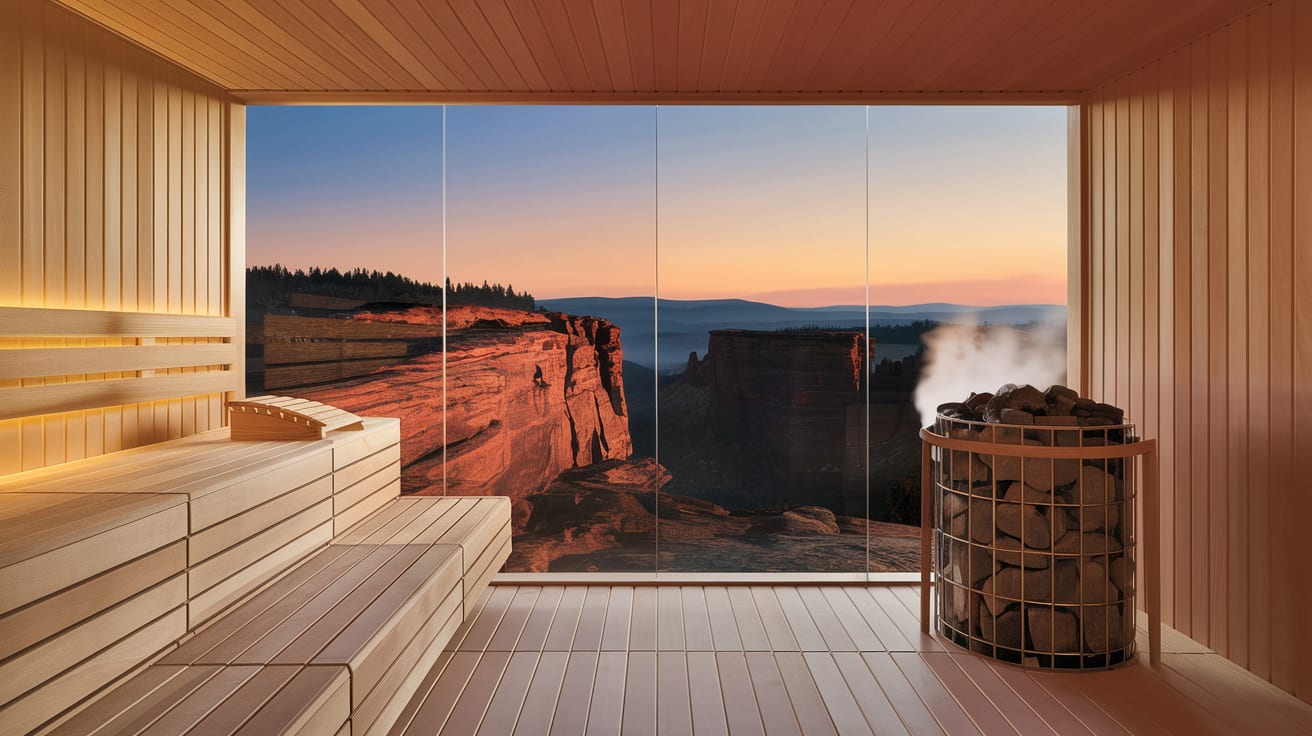
Two more results are worth keeping in mind. Regular passive heat, in the form of sauna, was associated with a 63% lower rate of sudden cardiac death in a 20-year Finnish cohort of 2,315 men, which is one reason heat exposure is now studied as a cardiovascular intervention rather than only a stressor. And heat is not just physical: Stanford and Imperial College data link hot nights to worse sleep and mood, summarised in how heat and mental health are connected.
Why the Gulf is different
Almost every hydration and heat guideline was validated in temperate climates on athletes who go outdoors for a session and then live at 20 °C. In Riyadh the summer baseline is 40–45 °C with low humidity, which means sweat evaporates efficiently but fluid losses are large and easy to underestimate. In Jeddah and Dammam the problem reverses: humidity of 60–80% stops sweat from evaporating, so the body heats up at a lower air temperature and the wet-bulb reading, not the thermometer, is the number that matters. A third Gulf-specific factor is air-conditioning: moving from 22 °C indoors to 42 °C outdoors several times a day gives the body no stable signal to adapt to, so natural acclimatisation is slower than the textbooks assume. Finally, the hot season lasts five months, long enough that “wait for autumn” means losing almost half a year of training.
A practical plan for the hot months
- Acclimatise on purpose, weeks 1–2. Cut intensity by 20–30%, keep outdoor sessions to 45–60 minutes, and schedule them before 7 am or after 8 pm. Adaptation (lower heart rate, earlier sweating, more dilute sweat) is largely complete in 10–14 days.
- Measure your sweat rate once. Weigh yourself before and after a one-hour session, nude or in dry kit, and add what you drank. Most people in Gulf summers lose 1–2 litres an hour; plan to replace 60–80% during, the rest after.
- Drink to a plan, not to thirst alone. The 2.7–3.7 litres a day guidance is a floor for sedentary adults; training days need more, with sodium (roughly 500–1,000 mg per litre) whenever a session exceeds an hour. Clear urine all day is a sign of over-drinking, not of good hydration.
- Use cold-water immersion selectively. After races, tournaments or back-to-back hard days, yes. After strength sessions in a muscle-building block, skip it and use a cool shower instead.
- Move the hardest work indoors. When the wet-bulb temperature passes about 28 °C, intervals belong on a treadmill or in an air-conditioned gym; keep outdoor time for easy aerobic work and the acclimatisation stimulus.
- Protect skin as part of training. SPF 30+ reapplied every two hours, as set out in the sun-protection guide, is not cosmetic; sunburn impairs sweating in the burned area.
For a complete day-by-day version of this, see healthy living in hot weather.
Common mistakes
- Training at the same pace as in winter and reading the higher heart rate as “lost fitness”. It is the heat, and it reverses.
- Drinking only water during long sessions, which drives sodium down and produces the headache and nausea people blame on heat.
- Ice baths after every workout, which trades soreness today for smaller strength gains next month.
- Stopping all outdoor exercise from May to September, then restarting in October with no acclimatisation at all.
- Treating a “cooler” 36 °C humid evening on the coast as safer than a 42 °C dry afternoon in Riyadh. Often it is not.
When to seek medical help
Heat exhaustion (heavy sweating, weakness, dizziness, headache, nausea, cramps) is treated by stopping, cooling and rehydrating; it should resolve within an hour. Heat stroke is different: confusion, slurred speech, loss of coordination, hot skin that may be dry, or collapse. It is a medical emergency, and the correct response is to call 997, move the person to shade and cool them aggressively with water and air movement while waiting. Anyone taking diuretics, beta-blockers or medication for diabetes, and anyone with a heart condition, should discuss summer training with their doctor before changing their plan.
Articles in this pillar
 Hydration Strategy for Endurance Athletes: Beyond 2%
 Passive Heat Acclimation Exercise Capacity: 2026 Study Shows How 4 Days of Heat Exposure Boosts Fitness in Older Adults
 Cold Water Immersion Recovery Paradox: 2026 Review Reveals Why Your Ice Bath May Be Hurting Your Gains
 Water Intake Mental Focus: How Even Mild Dehydration Impairs Brain Performance, Research Shows
 Sauna Bathing Heart Health: What a 20-Year Finnish Study Reveals About Cardiovascular Longevity
 Why heat and mental health are linked: What studies show
 Seawater Minerals Athletic Recovery: What the Evidence Actually Supports
 Heat Adaptation Athletic Performance: 2026 Guide
 Sun Protection and Skin Care: The 2026 Complete Guide
 Summer Hydration: How Much Water You Need (2.7-3.7L Daily)
 Healthy Living in Hot Weather: Practical Tips