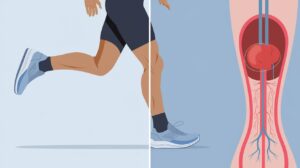

Regular exercise is one of the most reliable, well-documented ways to extend healthy years of life and improve overall wellbeing. Research from institutions including UT Southwestern has examined the biological mechanisms behind why consistent physical activity delivers such broad benefits, and the encouraging news is that extreme intensity isn’t the key variable—consistency and variety in the types of activity you do both matter more than pushing to exhaustion. Large-scale research spanning tens of thousands of participants has found that varied exercise routines tend to provide stronger benefits for both physical health and mental wellbeing than repeating the same single activity indefinitely.
Why Strength Training Deserves a Central Place
Strength and resistance training has become an increasingly central priority in modern fitness guidance, moving well beyond its old reputation as a niche pursuit for bodybuilders. The evidence is clear that strength training builds lean muscle mass, improves metabolic function, and meaningfully reduces the risk of chronic conditions including type 2 diabetes and cardiovascular disease. This holds true regardless of age or starting fitness level—it is genuinely never too late to begin. Even moderate everyday activities like brisk walking, climbing stairs, or gardening produce measurable health improvements over time. Current guidance generally points to combining forms of exercise—strength training, aerobic activity, and flexibility work—for the most complete long-term benefit, with a common target of around 150 minutes of moderate-intensity aerobic activity weekly, combined with two to three sessions of strength training.
The Mental Health Case for Exercise
One of the more striking areas of research concerns exercise and mental health. Aerobic activities like running, swimming, and dancing have been shown in multiple studies to meaningfully reduce symptoms of depression and anxiety, with effects that in some research compare favorably to other established interventions—though exercise works best as a complement to, not necessarily a replacement for, professional mental health care when symptoms are significant. Regular physical activity also appears to support brain health more broadly over time, and beyond mood, exercise reliably lowers stress hormone levels, supports healthy self-esteem, and improves sleep quality. The connection between movement and mood runs through several real physiological pathways: exercise triggers the release of endorphins, improves cardiovascular function that supports brain blood flow, and is linked to structural changes over time in brain regions involved in mood regulation. This combination makes regular physical activity a genuinely powerful tool for mental as well as physical wellness.
Adjusting Exercise for Different Life Stages
What effective exercise looks like reasonably shifts across a lifetime, and that’s a feature to work with rather than a barrier. Younger adults often have more capacity for higher-intensity training and faster recovery, making it a good window to build a strong strength and cardiovascular base. In midlife, maintaining muscle mass becomes an increasing priority, since muscle naturally declines with age starting in the 30s if not actively countered through resistance training. For older adults, balance and mobility work deserve equal billing alongside strength and cardio, since fall prevention becomes an increasingly significant factor in long-term independence. None of this means any age group should avoid particular types of exercise—it means the relative emphasis reasonably shifts, and a program that adapts to where you actually are, rather than chasing a fixed ideal from an earlier decade, tends to be more sustainable and safer over the long run.
Getting Started Practically
- Begin with 30 minutes of moderate activity, five days a week: brisk walking counts fully toward this target and requires no equipment or gym access.
- Add two to three strength sessions weekly: light weights or simple bodyweight exercises are enough to start seeing real benefit.
- Choose activities you genuinely enjoy: dancing, swimming, hiking, or team sports all count, and enjoyment is what sustains a routine over months and years rather than weeks.
- Prioritize consistency over perfection: moderate, regular activity consistently outperforms sporadic, intense bursts of effort followed by long gaps.
Building a Routine That Lasts
The research consistently points to the same underlying truth: the best exercise routine is the one you’ll actually sustain. Chasing an intense, demanding program that burns you out within a month delivers far less long-term benefit than a moderate, enjoyable routine maintained consistently for years. Varying your activities—mixing strength work, walking or cardio, and occasional flexibility or mobility sessions—also helps prevent the boredom and overuse injuries that often derail more rigid single-activity routines. Fitness, approached this way, becomes less a discrete project with a start and end date and more a durable part of how you live day to day.
Whatever your starting point, the path forward is straightforward: move consistently, mix up how you move, and build a routine around activities you can genuinely sustain—the compounding benefits, physical and mental, follow from that consistency far more than from any single dramatic effort. There is no perfect starting age or ideal moment to begin; the research consistently shows that the benefits of starting today outweigh whatever theoretical advantage might come from waiting for a more convenient time.
Overcoming Common Barriers
Time and access are the two most commonly cited barriers to regular exercise, and both are more surmountable than they often feel. Short sessions of 10 to 15 minutes, performed consistently, provide real benefit and are far more achievable on busy days than an all-or-nothing hour-long commitment that gets skipped entirely when time is tight. Similarly, home-based bodyweight exercises and outdoor walking require no gym membership or equipment, removing the access barrier that stops many people from starting at all. Addressing these practical obstacles directly, rather than waiting for ideal conditions, is often the difference between a routine that actually sticks and one that remains a good intention.
Sources
- ScienceDaily — Exercise Can Add Years to Your Life
- UT Southwestern — Brain Cells and the Endurance Benefits of Exercise
The information in this article is for educational purposes only and does not substitute professional medical advice or guidance from a qualified fitness trainer.
The Active Arabia weekly
One article built on one named study, every week, in your inbox. No noise.
We never share your email. Unsubscribe in one click.